



The Evolution of Speed: Ranking the World’s 10 Fastest Cars in 2026
In the relentless pursuit of automotive perfection, few metrics capture the imagination quite like outright speed. For decades, manufacturers have engaged in a technological arms race, pushing the boundaries of aerodynamics, engine development, and material science to create machines that redefine the very concept of velocity. As we navigate 2026, this quest for the ultimate top speed continues to evolve, blending traditional internal combustion might with the electrifying force of electric propulsion.
The landscape of hypercar performance has shifted dramatically. Gone are the days when a powerful V8 or V12 was the sole determinant of dominance. Today, torque vectoring, advanced battery management systems, and computational fluid dynamics play equally critical roles. This evolution has not only yielded faster vehicles but also safer, more sophisticated machines capable of sustained high-speed performance that would have been unthinkable just a decade ago.
This comprehensive analysis delves into the top 10 fastest cars in the world in 2026, examining the engineering marvels, the breaking records, and the technological innovations that place these vehicles at the pinnacle of automotive achievement. We will explore the contenders that have cemented their legendary status and those newcomers threatening to rewrite the record books.
Understanding the Metrics of Speed
Before diving into the list, it is crucial to understand how “fastest” is defined in the modern era. Historically, the focus was solely on the theoretical or unofficially recorded top speed. However, as manufacturers like Bugatti and SSC have demonstrated, achieving these speeds often requires specific conditions and careful verification.
In 2026, the industry largely accepts a dual standard:
Official Top Speed: A verified run conducted under standardized conditions, typically averaging a two-way pass to negate wind assistance.
Theoretical/Unverified Top Speed: The maximum speed predicted by the manufacturer based on simulations and dyno testing.
Furthermore, the rise of electric vehicles (EVs) like the Rimac Nevera has introduced another layer of complexity. EVs often achieve their peak speeds through software-limited parameters to protect the battery and drivetrain, meaning their full potential might be even higher than officially stated.
The 10 Fastest Cars in the World in 2026
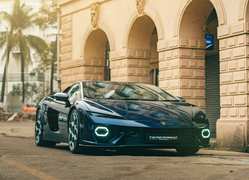 Based on current verified data, manufacturer claims, and industry consensus, here are the top 10 fastest cars in the world as of 2026.
Hennessey Venom F5: The American Speed King
When a car is named after the most destructive F5 tornado, it sets expectations. The Hennessey Venom F5 lives up to its moniker, standing as a testament to American ingenuity in the hypercar domain. Developed by Hennessey Special Vehicles in Sealy, Texas, the Venom F5 is engineered with a singular purpose: absolute velocity.
Technical Prowess:
At the heart of the Venom F5 lies a 6.6-liter twin-turbocharged V8 engine, aptly named “Fury.” This monstrous powerplant produces a staggering 1,817 horsepower and 1,193 lb-ft of torque. Mated to a seven-speed semi-automatic transmission, the F5 rockets from 0 to 60 mph in a blistering 2.6 seconds.
The Speed Record:
While Hennessey has set ambitious targets, the Venom F5 has unofficially reached speeds exceeding 270 mph during testing. The company’s ultimate goal is to break the 300 mph barrier, a feat that would cement its place in automotive history. The car’s lightweight carbon fiber chassis and low-drag aerodynamic design are crucial to achieving this velocity.
Market Position:
With a production run limited to just 24 units, the Venom F5 is an exclusive collector’s item. Its price tag of around $2.1 million places it firmly in the realm of the ultra-wealthy, but for those who acquire one, it represents the pinnacle of American hypercar engineering. The Hennessey Venom F5 is not just a car; it is a statement of intent.
Bugatti Chiron Super Sport: The Pinnacle of French Engineering
Bugatti has long been synonymous with speed, luxury, and engineering excellence. The Bugatti Chiron Super Sport represents the zenith of this legacy, taking the already formidable Chiron platform and optimizing it for ultimate high-speed performance.
Engineering Mastery:
The Super Sport is powered by Bugatti’s iconic 8.0-liter quad-turbocharged W16 engine, producing a monumental 1,600 horsepower. To manage this immense power at extreme velocities, Bugatti engineers have refined the aerodynamics extensively. The body is elongated, featuring a revised rear end and optimized air intakes to reduce drag and improve stability.
Performance Figures:
The Chiron Super Sport holds the official Guinness World Record for the fastest production car, having achieved a two-way average speed of 273.4 mph (440 km/h). This record run was conducted on the Ehra-Lessien test track in Germany, a proving ground specifically designed for such high-speed endeavors. The car’s all-wheel-drive system and advanced traction control ensure that this power is delivered to the tarmac effectively.
Design Philosophy:
Unlike the standard Chiron, the Super Sport emphasizes aerodynamic efficiency over outright downforce, allowing it to slice through the air with minimal resistance. Inside, the cabin retains Bugatti’s hallmark luxury, but with a focus on driver engagement and high-speed comfort.
SSC Tuatara: The Record Chaser
The SSC Tuatara has been at the center of some of the most talked-about speed attempts in recent years. Manufactured by SSC North America (formerly Shelby SuperCars), the Tuatara is a hypercar designed to shatter existing speed records and push the boundaries of what is physically possible.
Based on current verified data, manufacturer claims, and industry consensus, here are the top 10 fastest cars in the world as of 2026.
Hennessey Venom F5: The American Speed King
When a car is named after the most destructive F5 tornado, it sets expectations. The Hennessey Venom F5 lives up to its moniker, standing as a testament to American ingenuity in the hypercar domain. Developed by Hennessey Special Vehicles in Sealy, Texas, the Venom F5 is engineered with a singular purpose: absolute velocity.
Technical Prowess:
At the heart of the Venom F5 lies a 6.6-liter twin-turbocharged V8 engine, aptly named “Fury.” This monstrous powerplant produces a staggering 1,817 horsepower and 1,193 lb-ft of torque. Mated to a seven-speed semi-automatic transmission, the F5 rockets from 0 to 60 mph in a blistering 2.6 seconds.
The Speed Record:
While Hennessey has set ambitious targets, the Venom F5 has unofficially reached speeds exceeding 270 mph during testing. The company’s ultimate goal is to break the 300 mph barrier, a feat that would cement its place in automotive history. The car’s lightweight carbon fiber chassis and low-drag aerodynamic design are crucial to achieving this velocity.
Market Position:
With a production run limited to just 24 units, the Venom F5 is an exclusive collector’s item. Its price tag of around $2.1 million places it firmly in the realm of the ultra-wealthy, but for those who acquire one, it represents the pinnacle of American hypercar engineering. The Hennessey Venom F5 is not just a car; it is a statement of intent.
Bugatti Chiron Super Sport: The Pinnacle of French Engineering
Bugatti has long been synonymous with speed, luxury, and engineering excellence. The Bugatti Chiron Super Sport represents the zenith of this legacy, taking the already formidable Chiron platform and optimizing it for ultimate high-speed performance.
Engineering Mastery:
The Super Sport is powered by Bugatti’s iconic 8.0-liter quad-turbocharged W16 engine, producing a monumental 1,600 horsepower. To manage this immense power at extreme velocities, Bugatti engineers have refined the aerodynamics extensively. The body is elongated, featuring a revised rear end and optimized air intakes to reduce drag and improve stability.
Performance Figures:
The Chiron Super Sport holds the official Guinness World Record for the fastest production car, having achieved a two-way average speed of 273.4 mph (440 km/h). This record run was conducted on the Ehra-Lessien test track in Germany, a proving ground specifically designed for such high-speed endeavors. The car’s all-wheel-drive system and advanced traction control ensure that this power is delivered to the tarmac effectively.
Design Philosophy:
Unlike the standard Chiron, the Super Sport emphasizes aerodynamic efficiency over outright downforce, allowing it to slice through the air with minimal resistance. Inside, the cabin retains Bugatti’s hallmark luxury, but with a focus on driver engagement and high-speed comfort.
SSC Tuatara: The Record Chaser
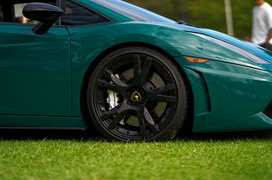
The SSC Tuatara has been at the center of some of the most talked-about speed attempts in recent years. Manufactured by SSC North America (formerly Shelby SuperCars), the Tuatara is a hypercar designed to shatter existing speed records and push the boundaries of what is physically possible.
 Aerodynamic Innovation:
The Tuatara’s design is a masterpiece of computational fluid dynamics. With a drag coefficient of just 0.279, its sleek, elongated body is shaped to cut through the air with minimal resistance. The car features an active aerodynamic system that adjusts the rear wing and underbody flaps to optimize downforce and stability at different speeds.
Powerplant and Performance:
Under the carbon fiber skin lies a 5.9-liter twin-turbocharged V8 engine, capable of producing over 1,750 horsepower on E85 fuel. While early speed attempts faced controversy and technical challenges, the Tuatara has since achieved verified speeds that place it firmly among the world’s elite.
The Record:
In January 2021, the Tuatara achieved a verified two-way average speed of 282.9 mph (455.3 km/h), setting a new benchmark for production cars. However, the company has stated that the car is capable of even higher speeds, with theoretical top speeds approaching 330 mph. The SSC Tuatara remains a formidable contender in the race for the ultimate speed crown.
Bugatti Veyron 16.4 Super Sport: The Legend That Paved the Way
Before the Chiron era, the Bugatti Veyron 16.4 Super Sport reigned supreme as the fastest production car in the world. Though superseded by its successor, the Veyron Super Sport remains a legend in the automotive world and continues to be one of the fastest cars ever built.
Breaking Barriers:
When the Veyron Super Sport was introduced in 2010, it shattered all previous speed records. It achieved a verified top speed of 267.855 mph (431.072 km/h), proving that a road-legal production car could achieve supercar performance levels. This achievement was a monumental feat of engineering, combining immense power with unprecedented stability.
Engineering Excellence:
The Veyron Super Sport is powered by a quad-turbocharged W16 engine producing 1,200 horsepower. This power is delivered through a seven-speed dual-clutch transmission and an advanced all-wheel-drive system. The car’s lightweight carbon fiber body and advanced aerodynamics were crucial to its success.
Legacy:
The Veyron Super Sport’s impact on the automotive industry cannot be overstated. It set the standard for hypercar performance and established Bugatti as the undisputed king of speed. Today, it remains a highly sought-after collector’s item, with values continuing to appreciate due to its legendary status.
Koenigsegg Agera: The Swedish Speed Demon
Koenigsegg, the Swedish manufacturer founded by Christian von Koenigsegg, has consistently pushed the boundaries of automotive engineering. The Koenigsegg Agera, produced from 2010 to 2018, is a testament to the company’s philosophy of innovation, performance, and design excellence.
Performance Metrics:
The Agera RS, a particularly potent variant, achieved a verified two-way average top speed of 277.87 mph (447.19 km/h) in 2017, briefly holding the title of the world’s fastest production car. The Agera is powered by a 5.0-liter twin-turbocharged V8 engine that produces around 1,160 horsepower in its standard form, with more powerful variants offering significantly more.
Design Philosophy:
Aerodynamic Innovation:
The Tuatara’s design is a masterpiece of computational fluid dynamics. With a drag coefficient of just 0.279, its sleek, elongated body is shaped to cut through the air with minimal resistance. The car features an active aerodynamic system that adjusts the rear wing and underbody flaps to optimize downforce and stability at different speeds.
Powerplant and Performance:
Under the carbon fiber skin lies a 5.9-liter twin-turbocharged V8 engine, capable of producing over 1,750 horsepower on E85 fuel. While early speed attempts faced controversy and technical challenges, the Tuatara has since achieved verified speeds that place it firmly among the world’s elite.
The Record:
In January 2021, the Tuatara achieved a verified two-way average speed of 282.9 mph (455.3 km/h), setting a new benchmark for production cars. However, the company has stated that the car is capable of even higher speeds, with theoretical top speeds approaching 330 mph. The SSC Tuatara remains a formidable contender in the race for the ultimate speed crown.
Bugatti Veyron 16.4 Super Sport: The Legend That Paved the Way
Before the Chiron era, the Bugatti Veyron 16.4 Super Sport reigned supreme as the fastest production car in the world. Though superseded by its successor, the Veyron Super Sport remains a legend in the automotive world and continues to be one of the fastest cars ever built.
Breaking Barriers:
When the Veyron Super Sport was introduced in 2010, it shattered all previous speed records. It achieved a verified top speed of 267.855 mph (431.072 km/h), proving that a road-legal production car could achieve supercar performance levels. This achievement was a monumental feat of engineering, combining immense power with unprecedented stability.
Engineering Excellence:
The Veyron Super Sport is powered by a quad-turbocharged W16 engine producing 1,200 horsepower. This power is delivered through a seven-speed dual-clutch transmission and an advanced all-wheel-drive system. The car’s lightweight carbon fiber body and advanced aerodynamics were crucial to its success.
Legacy:
The Veyron Super Sport’s impact on the automotive industry cannot be overstated. It set the standard for hypercar performance and established Bugatti as the undisputed king of speed. Today, it remains a highly sought-after collector’s item, with values continuing to appreciate due to its legendary status.
Koenigsegg Agera: The Swedish Speed Demon
Koenigsegg, the Swedish manufacturer founded by Christian von Koenigsegg, has consistently pushed the boundaries of automotive engineering. The Koenigsegg Agera, produced from 2010 to 2018, is a testament to the company’s philosophy of innovation, performance, and design excellence.
Performance Metrics:
The Agera RS, a particularly potent variant, achieved a verified two-way average top speed of 277.87 mph (447.19 km/h) in 2017, briefly holding the title of the world’s fastest production car. The Agera is powered by a 5.0-liter twin-turbocharged V8 engine that produces around 1,160 horsepower in its standard form, with more powerful variants offering significantly more.
Design Philosophy:
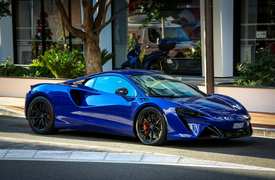 The Agera’s design is a perfect blend of form and function. Its sleek, aerodynamic body is crafted from carbon fiber, ensuring exceptional rigidity and lightweight construction. The car features