



The Quest for Velocity: Documenting the World’s Ten Fastest Production Cars in 2026
The pursuit of velocity has long been the driving force behind automotive innovation. From the earliest days of the internal combustion engine, engineers and designers have been locked in a perpetual contest to push the boundaries of what is physically possible on four wheels. This relentless quest has transformed the automobile from a simple mode of transport into a rolling sculpture of engineering prowess, a symphony of aerodynamics, and a testament to human ingenuity. As we navigate the complex landscape of the 2026 automotive market, the conversation inevitably turns to the pinnacles of this pursuit: the world’s fastest production cars. These machines are not merely fast; they represent the absolute zenith of current engineering capability, blending extreme performance with the relative civility required for road use.
The criteria for inclusion in this exclusive echelon are stringent, often subject to debate among enthusiasts and manufacturers alike. A “production car” must, in essence, be available for purchase by the public, even if in extremely limited numbers, and must adhere to certain road-legal specifications, however tenuous. This distinguishes them from one-off prototypes or bespoke racing machines. Furthermore, the validation of these speed claims often involves official runs under controlled conditions, though the allure of the unattainable top speed often overshadows the practicalities of testing. In 2026, the landscape of hypercar dominance is a fascinating tapestry woven with threads of electrification, computational fluid dynamics, and the enduring legacy of automotive dynasties. The following ten vehicles stand as the current arbiters of speed, each pushing the envelope in its own unique and spectacular fashion.
 The Hennessey Venom F5: Texas Takes on the World
When one speaks of American hypercar dominance, the Hennessey Venom F5 invariably rises to the forefront. Developed by Hennessey Special Vehicles in Sealy, Texas, the Venom F5 is not merely a fast car; it is a meticulously engineered statement of intent. Named after the F5 tornado, the most powerful category on the Fujita scale, the Venom F5 is designed to unleash a fury of performance that mirrors the devastating power of its namesake. The 2026 iteration of the Venom F5 represents the culmination of years of iterative development, refinement, and a near-obsessive focus on the ultimate metric: top speed.
At the heart of the Venom F5 lies its formidable powertrain. It eschews the hybrid systems that have become increasingly prevalent in this segment, opting instead for a brutish, yet highly sophisticated, pure internal combustion engine. The 6.6-liter twin-turbocharged V8, christened “Fury,” is a marvel of engineering. It is capable of producing a staggering 1,817 horsepower and 1,193 lb-ft of torque. This colossal output is delivered through a Ricardo seven-speed semi-automatic transmission, engineered to handle the immense forces involved. The power-to-weight ratio is simply breathtaking, with a dry weight hovering around the 1,360-kilogram mark.
However, speed is a function of more than just raw power. The Venom F5’s design is a masterclass in aerodynamic optimization. The sleek, teardrop profile is not merely for aesthetic appeal; every curve and contour has been sculpted to minimize drag and maximize downforce. The car’s body is constructed almost entirely from carbon fiber, reducing weight and increasing rigidity. This obsessive attention to detail allows the Venom F5 to achieve a theoretical top speed that borders on the unbelievable. While official runs have been meticulously documented, the car’s true potential remains a subject of intense speculation, with some engineers suggesting it could eclipse even the most optimistic projections. The Venom F5 is not just a car; it is a rolling embodiment of American automotive ambition, a symbol of what can be achieved when engineering audacity meets Texan determination.
The Bugatti Chiron Super Sport: Engineering Perfection at 300+ MPH
Bugatti, the name synonymous with hypercar royalty, continues to define the upper echelons of automotive performance. The Chiron Super Sport represents the pinnacle of the Chiron lineage, a vehicle that transcends the label of mere transportation to become a rolling work of art. It is a testament to the engineering might of the Volkswagen Group, which has poured unparalleled resources into perfecting the Bugatti formula. The Chiron Super Sport is not just about outright speed; it is about achieving that speed with an almost nonchalant grace, a level of refinement that belies the cataclysmic forces at play.
The heart of the Chiron Super Sport is an evolution of the iconic 8.0-liter quad-turbocharged W16 engine. In this iteration, the engine produces a formidable 1,578 horsepower and 1,180 lb-ft of torque. This power is channeled through a seven-speed dual-clutch transmission, a unit specifically developed to handle the extraordinary demands of the W16. The result is an acceleration profile that is simply staggering. The car rockets from 0 to 60 mph in under 2.4 seconds and continues to build momentum with a ferocity that seems to defy the laws of physics.
What truly distinguishes the Chiron Super Sport, however, is its aerodynamic optimization. To achieve its remarkable top speed, Bugatti engineers extensively revised the car’s bodywork. A longer tail section was added to reduce drag and improve stability at extreme velocities. The front end was reshaped to channel air more efficiently, while the underbody was smoothed to minimize turbulence. The result is a car that is not only blisteringly fast but also remarkably composed at speeds that would humble lesser vehicles. The Chiron Super Sport is a triumph of engineering, a perfect marriage of brute force and aerodynamic elegance, solidifying Bugatti’s legacy as a manufacturer of the world’s most desirable and extreme automobiles.
The Hennessey Venom F5: Texas Takes on the World
When one speaks of American hypercar dominance, the Hennessey Venom F5 invariably rises to the forefront. Developed by Hennessey Special Vehicles in Sealy, Texas, the Venom F5 is not merely a fast car; it is a meticulously engineered statement of intent. Named after the F5 tornado, the most powerful category on the Fujita scale, the Venom F5 is designed to unleash a fury of performance that mirrors the devastating power of its namesake. The 2026 iteration of the Venom F5 represents the culmination of years of iterative development, refinement, and a near-obsessive focus on the ultimate metric: top speed.
At the heart of the Venom F5 lies its formidable powertrain. It eschews the hybrid systems that have become increasingly prevalent in this segment, opting instead for a brutish, yet highly sophisticated, pure internal combustion engine. The 6.6-liter twin-turbocharged V8, christened “Fury,” is a marvel of engineering. It is capable of producing a staggering 1,817 horsepower and 1,193 lb-ft of torque. This colossal output is delivered through a Ricardo seven-speed semi-automatic transmission, engineered to handle the immense forces involved. The power-to-weight ratio is simply breathtaking, with a dry weight hovering around the 1,360-kilogram mark.
However, speed is a function of more than just raw power. The Venom F5’s design is a masterclass in aerodynamic optimization. The sleek, teardrop profile is not merely for aesthetic appeal; every curve and contour has been sculpted to minimize drag and maximize downforce. The car’s body is constructed almost entirely from carbon fiber, reducing weight and increasing rigidity. This obsessive attention to detail allows the Venom F5 to achieve a theoretical top speed that borders on the unbelievable. While official runs have been meticulously documented, the car’s true potential remains a subject of intense speculation, with some engineers suggesting it could eclipse even the most optimistic projections. The Venom F5 is not just a car; it is a rolling embodiment of American automotive ambition, a symbol of what can be achieved when engineering audacity meets Texan determination.
The Bugatti Chiron Super Sport: Engineering Perfection at 300+ MPH
Bugatti, the name synonymous with hypercar royalty, continues to define the upper echelons of automotive performance. The Chiron Super Sport represents the pinnacle of the Chiron lineage, a vehicle that transcends the label of mere transportation to become a rolling work of art. It is a testament to the engineering might of the Volkswagen Group, which has poured unparalleled resources into perfecting the Bugatti formula. The Chiron Super Sport is not just about outright speed; it is about achieving that speed with an almost nonchalant grace, a level of refinement that belies the cataclysmic forces at play.
The heart of the Chiron Super Sport is an evolution of the iconic 8.0-liter quad-turbocharged W16 engine. In this iteration, the engine produces a formidable 1,578 horsepower and 1,180 lb-ft of torque. This power is channeled through a seven-speed dual-clutch transmission, a unit specifically developed to handle the extraordinary demands of the W16. The result is an acceleration profile that is simply staggering. The car rockets from 0 to 60 mph in under 2.4 seconds and continues to build momentum with a ferocity that seems to defy the laws of physics.
What truly distinguishes the Chiron Super Sport, however, is its aerodynamic optimization. To achieve its remarkable top speed, Bugatti engineers extensively revised the car’s bodywork. A longer tail section was added to reduce drag and improve stability at extreme velocities. The front end was reshaped to channel air more efficiently, while the underbody was smoothed to minimize turbulence. The result is a car that is not only blisteringly fast but also remarkably composed at speeds that would humble lesser vehicles. The Chiron Super Sport is a triumph of engineering, a perfect marriage of brute force and aerodynamic elegance, solidifying Bugatti’s legacy as a manufacturer of the world’s most desirable and extreme automobiles.
 The SSC Tuatara: A Tale of Speed, Controversy, and Resilience
The story of the SSC Tuatara is one of the most compelling narratives in the recent history of hypercar development. Created by SSC North America, formerly Shelby SuperCars, the Tuatara was conceived with a singular vision: to reclaim the title of the world’s fastest production car. The journey, however, has been anything but straightforward, marked by ambitious speed trials, public scrutiny, and a remarkable demonstration of resilience. The 2026 Tuatara stands as a testament to the unwavering dedication of its creators, a vehicle that has overcome adversity to cement its place among the elite.
At the core of the Tuatara’s performance credentials is its formidable powertrain. It utilizes a 5.9-liter twin-turbocharged flat-plane-crank V8 engine, developed in collaboration with Nelson Racing Engines. This powerplant produces a staggering 1,350 horsepower on standard pump gas and a mind-boggling 1,750 horsepower on E85 ethanol. This immense power is delivered through a seven-speed dual-clutch transmission, ensuring that the car’s acceleration is as brutal as it is breathtaking. The Tuatara’s dry weight is remarkably low, around 1,247 kilograms, thanks to an extensive use of carbon fiber in its construction.
The Tuatara’s design is a masterclass in aerodynamic efficiency. The car’s flowing lines and active aerodynamic elements are designed to minimize drag while maximizing downforce at high speeds. The name “Tuatara” itself is derived from a reptile native to New Zealand, known for its ability to survive for millions of years without significant evolutionary change, a nod to the car’s timeless design principles. While its initial speed runs were mired in controversy, subsequent verified runs have silenced the skeptics, establishing the Tuatara as a legitimate contender in the hypercar realm. The car represents a bold statement of American engineering capability, a reminder that the pursuit of speed knows no boundaries.
The Koenigsegg Jesko: A Swedish Masterpiece of Engineering
The Swedish manufacturer Koenigsegg has long been a thorn in the side of the automotive establishment, consistently producing vehicles that challenge the very definition of what is possible. The Jesko, named after the father of founder Christian von Koenigsegg, is arguably the most extreme and technically advanced road car ever produced by the company. It represents a distillation of decades of experience and innovation, a vehicle designed with a singular focus on ultimate performance. The 2026 Jesko continues to dominate the conversation around hypercar dominance, a testament to its unparalleled engineering.
At the heart of the Jesko is a revolutionary 5.0-liter twin-turbocharged V8 engine. This powerplant is a work of art in itself, featuring a crankshaft that weighs a mere 5.9 kilograms, the lightest ever produced for a V8 engine. This engineering marvel allows the engine to rev to an astonishing 8,500 rpm and produce a breathtaking 1,600 horsepower when fueled with E85 ethanol. This power is delivered through Koenigsegg’s proprietary “LST” (Light Speed Transmission), a nine-speed dual-clutch transmission that can shift gears in a mere 20 milliseconds. This lightning-fast gear changes, combined with the car’s lightweight construction, results in acceleration that is simply off the charts.
The SSC Tuatara: A Tale of Speed, Controversy, and Resilience
The story of the SSC Tuatara is one of the most compelling narratives in the recent history of hypercar development. Created by SSC North America, formerly Shelby SuperCars, the Tuatara was conceived with a singular vision: to reclaim the title of the world’s fastest production car. The journey, however, has been anything but straightforward, marked by ambitious speed trials, public scrutiny, and a remarkable demonstration of resilience. The 2026 Tuatara stands as a testament to the unwavering dedication of its creators, a vehicle that has overcome adversity to cement its place among the elite.
At the core of the Tuatara’s performance credentials is its formidable powertrain. It utilizes a 5.9-liter twin-turbocharged flat-plane-crank V8 engine, developed in collaboration with Nelson Racing Engines. This powerplant produces a staggering 1,350 horsepower on standard pump gas and a mind-boggling 1,750 horsepower on E85 ethanol. This immense power is delivered through a seven-speed dual-clutch transmission, ensuring that the car’s acceleration is as brutal as it is breathtaking. The Tuatara’s dry weight is remarkably low, around 1,247 kilograms, thanks to an extensive use of carbon fiber in its construction.
The Tuatara’s design is a masterclass in aerodynamic efficiency. The car’s flowing lines and active aerodynamic elements are designed to minimize drag while maximizing downforce at high speeds. The name “Tuatara” itself is derived from a reptile native to New Zealand, known for its ability to survive for millions of years without significant evolutionary change, a nod to the car’s timeless design principles. While its initial speed runs were mired in controversy, subsequent verified runs have silenced the skeptics, establishing the Tuatara as a legitimate contender in the hypercar realm. The car represents a bold statement of American engineering capability, a reminder that the pursuit of speed knows no boundaries.
The Koenigsegg Jesko: A Swedish Masterpiece of Engineering
The Swedish manufacturer Koenigsegg has long been a thorn in the side of the automotive establishment, consistently producing vehicles that challenge the very definition of what is possible. The Jesko, named after the father of founder Christian von Koenigsegg, is arguably the most extreme and technically advanced road car ever produced by the company. It represents a distillation of decades of experience and innovation, a vehicle designed with a singular focus on ultimate performance. The 2026 Jesko continues to dominate the conversation around hypercar dominance, a testament to its unparalleled engineering.
At the heart of the Jesko is a revolutionary 5.0-liter twin-turbocharged V8 engine. This powerplant is a work of art in itself, featuring a crankshaft that weighs a mere 5.9 kilograms, the lightest ever produced for a V8 engine. This engineering marvel allows the engine to rev to an astonishing 8,500 rpm and produce a breathtaking 1,600 horsepower when fueled with E85 ethanol. This power is delivered through Koenigsegg’s proprietary “LST” (Light Speed Transmission), a nine-speed dual-clutch transmission that can shift gears in a mere 20 milliseconds. This lightning-fast gear changes, combined with the car’s lightweight construction, results in acceleration that is simply off the charts.
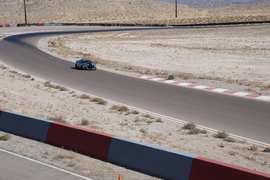 However, the Jesko’s true genius lies in its adaptability. It is offered in two distinct variants: the Absolut and the Attack. The Absolut is optimized for ultimate straight-line speed, with a long-tail aerodynamic profile designed to minimize drag. The Attack, on the other hand, is configured for track performance, with more aggressive aerodynamics and downforce. This dual-personality approach allows the Jesko to excel in a variety of conditions, a rare feat for a car of this extreme nature. The Koenigsegg Jesko is not just a car; it is a rolling testament to the