



The Quest for Velocity: Charting the Top 10 Fastest Cars on Earth in 2026
In the relentless pursuit of automotive perfection, few metrics captivate the imagination quite like sheer velocity. For over a century, engineers have relentlessly pushed the envelope of internal combustion—and increasingly, electric propulsion—to conquer the barrier of speed. What began as a contest between horse-drawn carriages has evolved into a multi-million-dollar arms race where physics itself seems to bend under the pressure of innovation. As we navigate the mid-2020s, the landscape of the world’s fastest cars has undergone a seismic shift. Gone are the days when a V12 engine and a sleek body were enough to claim the crown; today, we see a fusion of aerospace technology, carbon fiber monocoques, and hybrid-electric powertrains capable of shattering the 300 mph (483 km/h) barrier with unnerving ease.
This deep dive explores the apex predators of the asphalt jungle, the ten machines that currently define the zenith of automotive engineering in 2026. We will dissect the technologies that enable their mind-bending acceleration, analyze the engineering philosophies that differentiate a hypercar from a mere supercar, and reflect on the cultural impact of these technological marvels. From the sun-baked proving grounds of Nevada to the engineering labs of Stuttgart and Woking, this is the definitive ranking of the fastest cars in the world as of 2026.
The Evolution of Speed: From the Model T to the Mach-Buster
To fully appreciate the current landscape, one must understand the historical context of the speed wars. The early 20th century saw rudimentary race cars struggling to break the 100 mph mark. By the 1950s, with the advent of lightweight alloys and advanced aerodynamics, the 150 mph barrier fell. The 1980s and 90s brought us the digital era, where turbocharging and electronic fuel injection catapulted speeds toward 200 mph, epitomized by the McLaren F1.
However, the true revolution arrived in the 2010s with the “Hypercar Era.” Manufacturers like Bugatti demonstrated that with near-limitless budgets, they could achieve levels of speed previously reserved for fighter jets. Yet, the most significant disruption of the 2020s has been the rise of electric performance. Companies like Rimac have proven that electric motors, with their instant torque and lack of mechanical friction, offer a fundamentally different—and often superior—path to velocity. Today’s list reflects this dichotomy: a blend of V16 hybrids, pure electric juggernauts, and refined gasoline-powered beasts.
 Navigating the Speed Records: Verification and Controversy
Before listing the contenders, it is crucial to address the elephant in the room: speed records. The official \”fastest production car\” title is often a contested realm. The Guinness World Records typically requires two runs in opposite directions to account for wind and gradient, averaging the speeds. However, many manufacturers opt for high-speed exhibition runs, often lacking the rigorous verification required for official recognition.
This article considers vehicles that have either achieved verified records or have been demonstrated by their manufacturers to possess the capability to do so under appropriate conditions. We prioritize engineering reality over marketing claims, but acknowledge that the pursuit of these records is a continuous cat-and-mouse game, with new benchmarks being set almost annually.
The 2026 Pantheon: Top 10 Fastest Cars in the World
Hennessey Venom F5 Revolution Hypercar
Taking the coveted top spot in 2026 is the Hennessey Venom F5, specifically in its track-focused \”Revolution\” iteration. Founded by Texan tuner John Hennessey, the F5 is not merely a modified production car; it is a bespoke hypercar built from the ground up with a singular focus: breaking the 300 mph barrier and lapping the Nürburgring faster than anything else.
Engineering Mastery: The heart of the Venom F5 is its 6.6-liter twin-turbocharged V8, affectionately known as \”Fury.\” This engine produces a staggering 1,817 horsepower and 1,193 lb-ft of torque. Mated to a revolutionary seven-speed single-clutch automated manual transmission, the car can rocket from 0 to 60 mph in under 2.5 seconds.
Aerodynamic Prowess: What sets the Revolution apart is its aerodynamic optimization. Unlike the standard F5 designed for high-speed straight-line runs, the Revolution features a massive rear wing, a prominent front splitter, and dive planes. These elements generate significant downforce (estimated at over 3,000 lbs at 250 mph), allowing the car to maintain stability and grip at speeds previously thought impossible on a circuit.
Performance Credentials: While Hennessey has officially claimed a top speed in excess of 311 mph (500 km/h), the track-focused Revolution prioritizes cornering G-forces (rated at 1.58g). It is constructed around a featherlight carbon fiber monocoque, tipping the scales at a mere 3,075 lbs (1,395 kg), resulting in an astounding power-to-weight ratio that redefines the meaning of \”brutal.\”
Why It Leads: In 2026, the Venom F5 represents the pinnacle of gasoline-powered hypercar engineering. It combines the brute force of American muscle with the precision of European track technology, creating a vehicle that is as devastatingly fast on a straight as it is terrifyingly capable in the corners.
Bugatti Chiron Super Sport
For years, the Bugatti Chiron held the crown, and its successor, the Super Sport, continues to push the boundaries of what is achievable with sheer engineering might and luxury. The Chiron Super Sport is the realization of Ettore Bugatti’s philosophy: \”If it is comparable, it is no longer Bugatti.\”
Navigating the Speed Records: Verification and Controversy
Before listing the contenders, it is crucial to address the elephant in the room: speed records. The official \”fastest production car\” title is often a contested realm. The Guinness World Records typically requires two runs in opposite directions to account for wind and gradient, averaging the speeds. However, many manufacturers opt for high-speed exhibition runs, often lacking the rigorous verification required for official recognition.
This article considers vehicles that have either achieved verified records or have been demonstrated by their manufacturers to possess the capability to do so under appropriate conditions. We prioritize engineering reality over marketing claims, but acknowledge that the pursuit of these records is a continuous cat-and-mouse game, with new benchmarks being set almost annually.
The 2026 Pantheon: Top 10 Fastest Cars in the World
Hennessey Venom F5 Revolution Hypercar
Taking the coveted top spot in 2026 is the Hennessey Venom F5, specifically in its track-focused \”Revolution\” iteration. Founded by Texan tuner John Hennessey, the F5 is not merely a modified production car; it is a bespoke hypercar built from the ground up with a singular focus: breaking the 300 mph barrier and lapping the Nürburgring faster than anything else.
Engineering Mastery: The heart of the Venom F5 is its 6.6-liter twin-turbocharged V8, affectionately known as \”Fury.\” This engine produces a staggering 1,817 horsepower and 1,193 lb-ft of torque. Mated to a revolutionary seven-speed single-clutch automated manual transmission, the car can rocket from 0 to 60 mph in under 2.5 seconds.
Aerodynamic Prowess: What sets the Revolution apart is its aerodynamic optimization. Unlike the standard F5 designed for high-speed straight-line runs, the Revolution features a massive rear wing, a prominent front splitter, and dive planes. These elements generate significant downforce (estimated at over 3,000 lbs at 250 mph), allowing the car to maintain stability and grip at speeds previously thought impossible on a circuit.
Performance Credentials: While Hennessey has officially claimed a top speed in excess of 311 mph (500 km/h), the track-focused Revolution prioritizes cornering G-forces (rated at 1.58g). It is constructed around a featherlight carbon fiber monocoque, tipping the scales at a mere 3,075 lbs (1,395 kg), resulting in an astounding power-to-weight ratio that redefines the meaning of \”brutal.\”
Why It Leads: In 2026, the Venom F5 represents the pinnacle of gasoline-powered hypercar engineering. It combines the brute force of American muscle with the precision of European track technology, creating a vehicle that is as devastatingly fast on a straight as it is terrifyingly capable in the corners.
Bugatti Chiron Super Sport
For years, the Bugatti Chiron held the crown, and its successor, the Super Sport, continues to push the boundaries of what is achievable with sheer engineering might and luxury. The Chiron Super Sport is the realization of Ettore Bugatti’s philosophy: \”If it is comparable, it is no longer Bugatti.\”
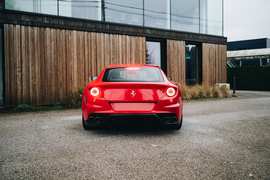 The Hyper-GT Concept: Unlike the track-focused Chiron Pur Sport, the Super Sport is designed as a hyper-GT—a Grand Tourer capable of traversing continents at triple-digit speeds in absolute comfort. This blend of luxury and extreme performance is what defines the Bugatti experience.
W16 Powerhouse: The heart of the Chiron Super Sport remains the iconic 8.0-liter quad-turbocharged W16 engine. In this iteration, it produces a colossal 1,600 horsepower. This power is delivered through an all-wheel-drive system with torque vectoring, ensuring that every ounce of energy is translated into forward motion without wheelspin.
Speed and Stability: To achieve its astronomical speeds, Bugatti engineers stretched the Chiron’s body by 9.8 inches (25 cm), creating a \”longtail\” design that dramatically reduces drag. The top speed is electronically limited to 273 mph (440 km/h) for safety and tire preservation, although independent testing suggests the car is capable of exceeding 300 mph in unrestricted form.
The $3.9 Million Statement: The Chiron Super Sport is not just a car; it is a rolling sculpture and a statement of ultimate automotive achievement. Its exclusivity, combined with its performance credentials, places it firmly at the pinnacle of the automotive world.
SSC Tuatara
The SSC Tuatara’s journey to the top has been anything but smooth, marked by controversy, a near-fatal crash, and a subsequent triumphant return. Yet, through it all, the Tuatara has proven to be a legitimate contender in the speed wars, representing the ingenuity of American hypercar manufacturer SSC North America.
The Record Attempt Saga: In 2020, SSC claimed a verified two-way average speed of 316.11 mph (508.73 km/h), a figure that would have made it the fastest production car. However, questions about the data recording led to a subsequent attempt. In January 2021, the Tuatara achieved a verified one-way speed of 282.9 mph (455.3 km/h), and later that year, a stunning 331 mph (532.9 km/h) one-way run. While the official record remains debated, the raw capability is undeniable.
Aerodynamic Efficiency: The Tuatara’s design is a masterclass in aerodynamics. Developed with input from automotive design legend Jason Castriota, the car features a drag coefficient of just 0.279—an astonishing figure for a car with this level of downforce. The active rear wing adjusts its angle depending on speed and braking demands, optimizing the balance between drag and grip.
Power and Performance: Beneath its otherworldly exterior lies a 5.9-liter twin-turbocharged flat-plane crank V8, producing 1,350 horsepower on pump gas and a staggering 1,750 horsepower on E85 ethanol. This power, combined with a dry weight of just 2,750 lbs (1,247 kg), allows for a 0-60 mph sprint in a blistering 2.5 seconds.
Rimac Nevera
The Rimac Nevera represents the dawn of the electric hypercar era, proving that battery power can eclipse internal combustion when it comes to raw acceleration. Developed by Croatian automotive wunderkind Mate Rimac, the Nevera is a technological tour de force that redefines the very concept of a \”fast car.\”
The Hyper-GT Concept: Unlike the track-focused Chiron Pur Sport, the Super Sport is designed as a hyper-GT—a Grand Tourer capable of traversing continents at triple-digit speeds in absolute comfort. This blend of luxury and extreme performance is what defines the Bugatti experience.
W16 Powerhouse: The heart of the Chiron Super Sport remains the iconic 8.0-liter quad-turbocharged W16 engine. In this iteration, it produces a colossal 1,600 horsepower. This power is delivered through an all-wheel-drive system with torque vectoring, ensuring that every ounce of energy is translated into forward motion without wheelspin.
Speed and Stability: To achieve its astronomical speeds, Bugatti engineers stretched the Chiron’s body by 9.8 inches (25 cm), creating a \”longtail\” design that dramatically reduces drag. The top speed is electronically limited to 273 mph (440 km/h) for safety and tire preservation, although independent testing suggests the car is capable of exceeding 300 mph in unrestricted form.
The $3.9 Million Statement: The Chiron Super Sport is not just a car; it is a rolling sculpture and a statement of ultimate automotive achievement. Its exclusivity, combined with its performance credentials, places it firmly at the pinnacle of the automotive world.
SSC Tuatara
The SSC Tuatara’s journey to the top has been anything but smooth, marked by controversy, a near-fatal crash, and a subsequent triumphant return. Yet, through it all, the Tuatara has proven to be a legitimate contender in the speed wars, representing the ingenuity of American hypercar manufacturer SSC North America.
The Record Attempt Saga: In 2020, SSC claimed a verified two-way average speed of 316.11 mph (508.73 km/h), a figure that would have made it the fastest production car. However, questions about the data recording led to a subsequent attempt. In January 2021, the Tuatara achieved a verified one-way speed of 282.9 mph (455.3 km/h), and later that year, a stunning 331 mph (532.9 km/h) one-way run. While the official record remains debated, the raw capability is undeniable.
Aerodynamic Efficiency: The Tuatara’s design is a masterclass in aerodynamics. Developed with input from automotive design legend Jason Castriota, the car features a drag coefficient of just 0.279—an astonishing figure for a car with this level of downforce. The active rear wing adjusts its angle depending on speed and braking demands, optimizing the balance between drag and grip.
Power and Performance: Beneath its otherworldly exterior lies a 5.9-liter twin-turbocharged flat-plane crank V8, producing 1,350 horsepower on pump gas and a staggering 1,750 horsepower on E85 ethanol. This power, combined with a dry weight of just 2,750 lbs (1,247 kg), allows for a 0-60 mph sprint in a blistering 2.5 seconds.
Rimac Nevera
The Rimac Nevera represents the dawn of the electric hypercar era, proving that battery power can eclipse internal combustion when it comes to raw acceleration. Developed by Croatian automotive wunderkind Mate Rimac, the Nevera is a technological tour de force that redefines the very concept of a \”fast car.\”
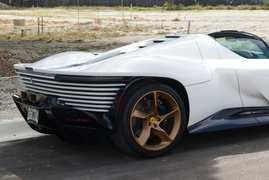 Electric Revolution: The Nevera eschews the need for a traditional gearbox. It