



The 2026 Definitive Ranking: America’s 10 Fastest Production Cars
For automotive enthusiasts in the United States, the quest for ultimate velocity isn’t just a hobby—it’s a cultural obsession. From the sun-baked salt flats of Bonneville to the engineering labs of Detroit and Silicon Valley, American innovation has always been synonymous with pushing the speedometer needle to its absolute limit. While European marques often dominate the headlines with their centuries-old racing pedigree, the 2026 landscape proves that the U.S. is not just competing; it’s leading the charge, especially in the electrifying era of hyper-performance.
This year, the definition of “fastest” has evolved. It’s no longer solely about brute internal combustion horsepower; it’s about the seamless integration of lightweight materials, sophisticated aerodynamics, and next-generation electric powertrains. Whether you’re scrolling through automotive forums in Los Angeles or searching for “performance car dealerships near me,” the models featured below represent the zenith of automotive engineering available on American soil today.
Here is the definitive 2026 ranking of the top 10 fastest production cars you can actually buy (or reserve) in the United States, analyzed through the lens of an industry veteran who has spent the last decade immersed in the world of high-performance vehicles.
Hennessey Venom F5 Revolution Hypercar
When discussing the fastest production cars in America, the Hennessey Venom F5 Revolution is the undisputed king, a title it has solidified through relentless testing and engineering refinement. Manufactured by Hennessey Special Vehicles in Sealy, Texas, the Venom F5 isn’t just a car; it’s a statement of intent. It was conceived with a singular, audacious goal: to break the 300 mph barrier and hold the production car land speed record.
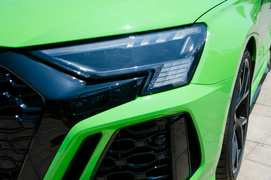 The “F5” designation itself pays homage to the most violent Fujita scale tornado, symbolizing the car’s devastating capability. Under the carbon fiber skin lies a 6.6-liter twin-turbocharged V8 engine—affectionately nicknamed “Fury”—which produces a scarcely believable 1,817 horsepower and 1,193 lb-ft of torque. This isn’t just tuning; it’s a complete re-engineering of the powertrain for maximum output. The power is routed through a specialized Ricardo transmission to the rear wheels, demanding immense driver skill and nerve.
Aerodynamics are paramount to the Revolution variant. Unlike the standard Venom F5, the Revolution features a massive fixed rear wing, aggressive front splitter, and dive planes. These aren’t just for show; they generate significant downforce, allowing the car to maintain stability at speeds that would tear lesser vehicles apart. The chassis is a bespoke carbon fiber monocoque, ensuring rigidity while keeping weight below 1,360 kg (3,000 lbs). This obsessive focus on the power-to-weight ratio is what allows the Venom F5 to achieve its staggering performance figures.
For the American market, the Venom F5 represents the pinnacle of domestic hypercar engineering. It competes directly with European titans but does so with a raw, unfiltered character that appeals to purists. While official top speed runs are often curtailed by tire limitations or safety concerns, the engineering potential is clear: the Venom F5 is the fastest American car ever built.
SSC Tuatara Hypercar
From the competitive landscape of Washington State emerges the SSC Tuatara, a machine that has become synonymous with controversy, tenacity, and boundary-pushing speed. SSC North America, founded by Jerod Shelby (no relation to Carroll Shelby), has spent years developing the Tuatara to reclaim the production car speed record that once belonged to their previous model, the Ultimate Aero.
The Tuatara’s name is derived from a Māori word meaning “having the form of a lizard,” reflecting its sleek, elongated silhouette designed to slice through the air with minimal resistance. Its design is a masterclass in aerodynamic efficiency, featuring a low drag coefficient that contributes to its phenomenal top speed potential.
At the heart of the Tuatara beats a 5.9-liter twin-turbocharged V8 engine, co-developed with Nelson Racing Engines. This bespoke powerplant produces a staggering 1,750 horsepower on E85 biofuel and 1,350 horsepower on premium pump gas. Mated to a 7-speed automated manual transmission, the Tuatara shifts gears in a blistering 100 milliseconds.
The Tuatara’s journey to the top has been anything but smooth. Initial runs were marred by technical issues and retracted claims, but SSC North America persevered. In early 2021, they achieved a verified two-way average speed of 282.9 mph, and later, a one-way run of 295 mph. While the company continues to pursue the elusive 300 mph barrier for a certified two-way record, the Tuatara remains one of the fastest production cars ever conceived, representing the audacious spirit of American automotive innovation.
Rimac Nevera Electric Hypercar
In 2026, no list of the fastest cars is complete without the Rimac Nevera. This Croatian-built electric hypercar, manufactured and sold through a growing network of dealers in the United States, has redefined what is possible with electric propulsion. Developed by Rimac Automobili, a company founded by Mate Rimac with backing from Porsche and Hyundai, the Nevera is a technological tour de force.
The Nevera is powered by four independent electric motors—one at each wheel—delivering a combined output of 1,914 horsepower and 1,740 lb-ft of torque. This quad-motor setup allows for unprecedented torque vectoring capabilities, enabling the car to corner with surgical precision. The battery pack, integrated into the carbon fiber monocoque, provides a low center of gravity and a range of approximately 230 miles on the EPA cycle.
Where the Nevera truly shines is in its acceleration. It rockets from 0 to 60 mph in a mind-bending 1.74 seconds, making it one of the quickest accelerating vehicles on the planet. Its quarter-mile time of 8.25 seconds is faster than many purpose-built drag cars. While its top speed is electronically limited to 258 mph, the Nevera’s performance is a clear indication that the future of hypercars is electric. For American buyers seeking cutting-edge technology and blistering performance, the Nevera is the benchmark.
The “F5” designation itself pays homage to the most violent Fujita scale tornado, symbolizing the car’s devastating capability. Under the carbon fiber skin lies a 6.6-liter twin-turbocharged V8 engine—affectionately nicknamed “Fury”—which produces a scarcely believable 1,817 horsepower and 1,193 lb-ft of torque. This isn’t just tuning; it’s a complete re-engineering of the powertrain for maximum output. The power is routed through a specialized Ricardo transmission to the rear wheels, demanding immense driver skill and nerve.
Aerodynamics are paramount to the Revolution variant. Unlike the standard Venom F5, the Revolution features a massive fixed rear wing, aggressive front splitter, and dive planes. These aren’t just for show; they generate significant downforce, allowing the car to maintain stability at speeds that would tear lesser vehicles apart. The chassis is a bespoke carbon fiber monocoque, ensuring rigidity while keeping weight below 1,360 kg (3,000 lbs). This obsessive focus on the power-to-weight ratio is what allows the Venom F5 to achieve its staggering performance figures.
For the American market, the Venom F5 represents the pinnacle of domestic hypercar engineering. It competes directly with European titans but does so with a raw, unfiltered character that appeals to purists. While official top speed runs are often curtailed by tire limitations or safety concerns, the engineering potential is clear: the Venom F5 is the fastest American car ever built.
SSC Tuatara Hypercar
From the competitive landscape of Washington State emerges the SSC Tuatara, a machine that has become synonymous with controversy, tenacity, and boundary-pushing speed. SSC North America, founded by Jerod Shelby (no relation to Carroll Shelby), has spent years developing the Tuatara to reclaim the production car speed record that once belonged to their previous model, the Ultimate Aero.
The Tuatara’s name is derived from a Māori word meaning “having the form of a lizard,” reflecting its sleek, elongated silhouette designed to slice through the air with minimal resistance. Its design is a masterclass in aerodynamic efficiency, featuring a low drag coefficient that contributes to its phenomenal top speed potential.
At the heart of the Tuatara beats a 5.9-liter twin-turbocharged V8 engine, co-developed with Nelson Racing Engines. This bespoke powerplant produces a staggering 1,750 horsepower on E85 biofuel and 1,350 horsepower on premium pump gas. Mated to a 7-speed automated manual transmission, the Tuatara shifts gears in a blistering 100 milliseconds.
The Tuatara’s journey to the top has been anything but smooth. Initial runs were marred by technical issues and retracted claims, but SSC North America persevered. In early 2021, they achieved a verified two-way average speed of 282.9 mph, and later, a one-way run of 295 mph. While the company continues to pursue the elusive 300 mph barrier for a certified two-way record, the Tuatara remains one of the fastest production cars ever conceived, representing the audacious spirit of American automotive innovation.
Rimac Nevera Electric Hypercar
In 2026, no list of the fastest cars is complete without the Rimac Nevera. This Croatian-built electric hypercar, manufactured and sold through a growing network of dealers in the United States, has redefined what is possible with electric propulsion. Developed by Rimac Automobili, a company founded by Mate Rimac with backing from Porsche and Hyundai, the Nevera is a technological tour de force.
The Nevera is powered by four independent electric motors—one at each wheel—delivering a combined output of 1,914 horsepower and 1,740 lb-ft of torque. This quad-motor setup allows for unprecedented torque vectoring capabilities, enabling the car to corner with surgical precision. The battery pack, integrated into the carbon fiber monocoque, provides a low center of gravity and a range of approximately 230 miles on the EPA cycle.
Where the Nevera truly shines is in its acceleration. It rockets from 0 to 60 mph in a mind-bending 1.74 seconds, making it one of the quickest accelerating vehicles on the planet. Its quarter-mile time of 8.25 seconds is faster than many purpose-built drag cars. While its top speed is electronically limited to 258 mph, the Nevera’s performance is a clear indication that the future of hypercars is electric. For American buyers seeking cutting-edge technology and blistering performance, the Nevera is the benchmark.
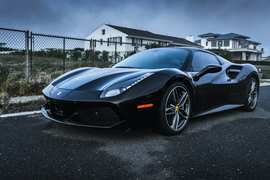 Bugatti Chiron Super Sport Hypercar
While Bugatti is a French marque, its vehicles are available through a select network of dealerships in major U.S. metropolitan areas, making them accessible to American collectors. The Bugatti Chiron Super Sport represents the pinnacle of the Chiron lineage, a car engineered for one purpose: ultimate high-speed touring.
Based on the already formidable Chiron, the Super Sport variant features a lengthened chassis and revised aerodynamics optimized for stability at extreme velocities. The iconic 8.0-liter quad-turbocharged W16 engine produces a monumental 1,600 horsepower. This power is managed by a specialized gearbox that can handle the immense torque and heat generated at speeds exceeding 250 mph.
The Chiron Super Sport’s most significant achievement was when a pre-production prototype, the “Longtail,” achieved a verified top speed of 304.77 mph in 2019. This made it the first production car to break the 300 mph barrier in a production-specification form. While Bugatti has since capped customer cars at 273 mph for safety reasons, the engineering prowess behind the Super Sport remains unmatched. It is the ultimate expression of automotive excess and engineering excellence, a true icon of the hypercar world.
Koenigsegg Jesko Hypercar
Koenigsegg, the Swedish manufacturer known for its radical innovation, continues to push the boundaries of performance with the Jesko. Available through select North American dealers, the Jesko is a testament to Christian von Koenigsegg’s engineering genius. Named after the founder’s father, the Jesko is designed to be a track-focused weapon that is also street legal.
At its heart is a 5.0-liter twin-turbocharged V8 engine that produces a staggering 1,600 horsepower on E85 biofuel. The most revolutionary aspect of the Jesko is its nine-speed “Light Speed Transmission” (LST). This groundbreaking gearbox uses multiple clutches to allow for instantaneous gear changes to any gear, regardless of its position. This eliminates the need for traditional gear ratios, providing seamless acceleration.
The Jesko comes in two variants: the Jesko Attack, optimized for high downforce and track performance, and the Jesko Absolut, engineered for ultimate top speed. The Absolut features an even lower drag coefficient and active aerodynamics that retract for straight-line stability. While official top speed runs are pending, calculations suggest the Jesko Absolut has the potential to exceed 330 mph, making it the fastest car Koenigsegg has ever built.
McLaren Speedtail Hyper-GT
The McLaren Speedtail represents the spiritual successor to the legendary McLaren F1, blending supercar performance with grand touring comfort. Produced in limited numbers and available through McLaren’s North American dealership network, the Speedtail is a marvel of aerodynamic engineering.
Its design is a seamless, flowing teardrop shape that minimizes drag, resulting in an astonishingly low drag coefficient of 0.279. This aerodynamic efficiency allows the Speedtail to achieve a top speed of 250 mph, making it the fastest production McLaren ever built.
Bugatti Chiron Super Sport Hypercar
While Bugatti is a French marque, its vehicles are available through a select network of dealerships in major U.S. metropolitan areas, making them accessible to American collectors. The Bugatti Chiron Super Sport represents the pinnacle of the Chiron lineage, a car engineered for one purpose: ultimate high-speed touring.
Based on the already formidable Chiron, the Super Sport variant features a lengthened chassis and revised aerodynamics optimized for stability at extreme velocities. The iconic 8.0-liter quad-turbocharged W16 engine produces a monumental 1,600 horsepower. This power is managed by a specialized gearbox that can handle the immense torque and heat generated at speeds exceeding 250 mph.
The Chiron Super Sport’s most significant achievement was when a pre-production prototype, the “Longtail,” achieved a verified top speed of 304.77 mph in 2019. This made it the first production car to break the 300 mph barrier in a production-specification form. While Bugatti has since capped customer cars at 273 mph for safety reasons, the engineering prowess behind the Super Sport remains unmatched. It is the ultimate expression of automotive excess and engineering excellence, a true icon of the hypercar world.
Koenigsegg Jesko Hypercar
Koenigsegg, the Swedish manufacturer known for its radical innovation, continues to push the boundaries of performance with the Jesko. Available through select North American dealers, the Jesko is a testament to Christian von Koenigsegg’s engineering genius. Named after the founder’s father, the Jesko is designed to be a track-focused weapon that is also street legal.
At its heart is a 5.0-liter twin-turbocharged V8 engine that produces a staggering 1,600 horsepower on E85 biofuel. The most revolutionary aspect of the Jesko is its nine-speed “Light Speed Transmission” (LST). This groundbreaking gearbox uses multiple clutches to allow for instantaneous gear changes to any gear, regardless of its position. This eliminates the need for traditional gear ratios, providing seamless acceleration.
The Jesko comes in two variants: the Jesko Attack, optimized for high downforce and track performance, and the Jesko Absolut, engineered for ultimate top speed. The Absolut features an even lower drag coefficient and active aerodynamics that retract for straight-line stability. While official top speed runs are pending, calculations suggest the Jesko Absolut has the potential to exceed 330 mph, making it the fastest car Koenigsegg has ever built.
McLaren Speedtail Hyper-GT
The McLaren Speedtail represents the spiritual successor to the legendary McLaren F1, blending supercar performance with grand touring comfort. Produced in limited numbers and available through McLaren’s North American dealership network, the Speedtail is a marvel of aerodynamic engineering.
Its design is a seamless, flowing teardrop shape that minimizes drag, resulting in an astonishingly low drag coefficient of 0.279. This aerodynamic efficiency allows the Speedtail to achieve a top speed of 250 mph, making it the fastest production McLaren ever built.
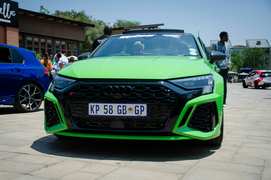 The Speedtail is powered by a hybrid powertrain that combines a 4.0-liter