



The Evolution of the World’s Fastest Cars: 2026 Hypercar Showdown
The quest for ultimate velocity has always captivated the automotive world. For decades, engineers and designers have pushed the boundaries of physics, striving to create machines that can rewrite the definition of speed. In 2026, the hypercar landscape is more thrilling than ever, with manufacturers vying for the coveted title of the fastest car in the world. This isn’t just about bragging rights; it’s a showcase of cutting-edge technology, aerodynamic mastery, and raw power that trickles down to the everyday driver.
As an industry veteran with ten years of experience tracking the evolution of these automotive marvels, I’ve witnessed firsthand the shift from roaring V12s to silent electric behemoths. The numbers alone are staggering, but what truly fascinates me is the engineering philosophy behind each machine. Today’s top contenders aren’t just fast; they are symphonies of carbon fiber, computational fluid dynamics, and electric propulsion.
In this comprehensive guide, we’ll dive deep into the current hierarchy of speed, exploring the technology, the design, and the intangible aura that surrounds these automotive legends. Whether you’re a die-hard petrolhead in Los Angeles or a tech enthusiast in Tokyo, the story of the world’s fastest cars in 2026 is one that will leave you breathless.
The Reigning Champions: A Look at the Current Top Contenders
The title of “fastest car in the world” is a hotly contested one, with several manufacturers pushing the envelope in 2026. While Bugatti once held a near-monopoly on the top spot, the landscape has diversified, with American and Swedish manufacturers making significant inroads.
The Bugatti Chiron Super Sport 300+: Still a Legend
Despite being a few years old, the Bugatti Chiron Super Sport 300+ remains a benchmark in the hypercar world. Its record-breaking run to 304 mph (489 km/h) in 2019 set the stage for the current generation of speed machines. Powered by the iconic 8.0-liter quad-turbocharged W16 engine, the Chiron produces a staggering 1,600 horsepower.
What makes the Chiron Super Sport 300+ stand out is its aerodynamic optimization. Unlike the standard Chiron, this variant features a longer, more streamlined body designed to reduce drag at extreme speeds. The iconic “Longtail\” design isn’t just for show; it’s a masterclass in airflow management, allowing the car to slice through the air with minimal resistance.
 While Bugatti has since introduced the Bolide, a track-only hypercar, the Chiron Super Sport 300+ remains the fastest production car ever to exceed the 300 mph barrier. Its legacy continues to inspire the next generation of speed demons.
The Koenigsegg Jesko Absolut: The King of Aerodynamics
Koenigsegg, the Swedish disruptor, has long been a thorn in Bugatti’s side. With the Jesko Absolut, Christian von Koenigsegg has created what he believes is the ultimate land-based speed machine. While official top speed runs are pending, simulations predict a theoretical top speed of over 330 mph (531 km/h).
The Jesko Absolut is a testament to Koenigsegg’s engineering prowess. Its 5.0-liter twin-turbocharged V8 produces a mind-boggling 1,600 horsepower on E85 fuel. However, the real magic lies in its aerodynamics. The car features an adaptive rear wing that flattens at high speeds to reduce drag, and the chassis is designed to be incredibly stable at velocity.
What I find most impressive about the Jesko Absolut is its focus on driver engagement. Unlike some of its competitors that rely on brute force, the Koenigsegg offers a visceral, connected driving experience. The 9-speed \”Light Speed Transmission\” can shift gears in milliseconds, ensuring that the engine is always operating in its optimal power band.
The SSC Tuatara: A Tale of Ambition and Controversy
The SSC Tuatara’s journey to the top has been anything but smooth. Initially, the company claimed a record-breaking top speed of 316 mph (509 km/h), but subsequent analysis revealed inconsistencies in the data. This led to a period of uncertainty for the ambitious American manufacturer.
However, SSC has persevered. In 2022, they conducted a verified top speed run, reaching 282.9 mph (455.3 km/h), with a two-way average of 295 mph (474.8 km/h). While this fell short of the initial claims, it still places the Tuatara among the fastest production cars in the world.
The Tuatara is powered by a 5.9-liter twin-turbocharged V8 engine that produces 1,750 horsepower on E85 fuel. Its design is a masterpiece of aerodynamic engineering, with a drag coefficient of just 0.279. The car’s body is made entirely of carbon fiber, keeping its weight under 3,000 pounds.
The Rimac Nevera: The Electric Revolution
The Rimac Nevera represents the future of the hypercar. This Croatian-built electric marvel shatters traditional notions of performance. With four independent electric motors, the Nevera produces a combined output of 1,914 horsepower and 1,740 lb-ft of torque.
What’s truly astonishing is the Nevera’s acceleration. It can rocket from 0 to 60 mph (97 km/h) in just 1.85 seconds, and its top speed is electronically limited to 258 mph (415 km/h). But the Nevera isn’t just about straight-line speed; it’s also a capable track car, thanks to its advanced torque vectoring system.
The Nevera’s success highlights the growing trend of electrification in the hypercar segment. As battery technology improves, electric vehicles are proving that they can deliver performance that rivals, and in some cases exceeds, traditional internal combustion engines.
The Evolving Landscape of Speed
The hypercar segment is constantly evolving, with new contenders emerging every year. Here are some of the other notable machines making waves in 2026:
While Bugatti has since introduced the Bolide, a track-only hypercar, the Chiron Super Sport 300+ remains the fastest production car ever to exceed the 300 mph barrier. Its legacy continues to inspire the next generation of speed demons.
The Koenigsegg Jesko Absolut: The King of Aerodynamics
Koenigsegg, the Swedish disruptor, has long been a thorn in Bugatti’s side. With the Jesko Absolut, Christian von Koenigsegg has created what he believes is the ultimate land-based speed machine. While official top speed runs are pending, simulations predict a theoretical top speed of over 330 mph (531 km/h).
The Jesko Absolut is a testament to Koenigsegg’s engineering prowess. Its 5.0-liter twin-turbocharged V8 produces a mind-boggling 1,600 horsepower on E85 fuel. However, the real magic lies in its aerodynamics. The car features an adaptive rear wing that flattens at high speeds to reduce drag, and the chassis is designed to be incredibly stable at velocity.
What I find most impressive about the Jesko Absolut is its focus on driver engagement. Unlike some of its competitors that rely on brute force, the Koenigsegg offers a visceral, connected driving experience. The 9-speed \”Light Speed Transmission\” can shift gears in milliseconds, ensuring that the engine is always operating in its optimal power band.
The SSC Tuatara: A Tale of Ambition and Controversy
The SSC Tuatara’s journey to the top has been anything but smooth. Initially, the company claimed a record-breaking top speed of 316 mph (509 km/h), but subsequent analysis revealed inconsistencies in the data. This led to a period of uncertainty for the ambitious American manufacturer.
However, SSC has persevered. In 2022, they conducted a verified top speed run, reaching 282.9 mph (455.3 km/h), with a two-way average of 295 mph (474.8 km/h). While this fell short of the initial claims, it still places the Tuatara among the fastest production cars in the world.
The Tuatara is powered by a 5.9-liter twin-turbocharged V8 engine that produces 1,750 horsepower on E85 fuel. Its design is a masterpiece of aerodynamic engineering, with a drag coefficient of just 0.279. The car’s body is made entirely of carbon fiber, keeping its weight under 3,000 pounds.
The Rimac Nevera: The Electric Revolution
The Rimac Nevera represents the future of the hypercar. This Croatian-built electric marvel shatters traditional notions of performance. With four independent electric motors, the Nevera produces a combined output of 1,914 horsepower and 1,740 lb-ft of torque.
What’s truly astonishing is the Nevera’s acceleration. It can rocket from 0 to 60 mph (97 km/h) in just 1.85 seconds, and its top speed is electronically limited to 258 mph (415 km/h). But the Nevera isn’t just about straight-line speed; it’s also a capable track car, thanks to its advanced torque vectoring system.
The Nevera’s success highlights the growing trend of electrification in the hypercar segment. As battery technology improves, electric vehicles are proving that they can deliver performance that rivals, and in some cases exceeds, traditional internal combustion engines.
The Evolving Landscape of Speed
The hypercar segment is constantly evolving, with new contenders emerging every year. Here are some of the other notable machines making waves in 2026:
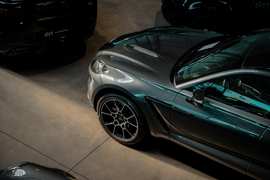 The Aston Martin Valkyrie: A collaboration between Aston Martin and Red Bull Racing, the Valkyrie is a road-legal F1 car. Its 6.5-liter Cosworth V12 engine produces 1,160 horsepower and revs to a stratospheric 11,000 rpm.
The McLaren Speedtail: A spiritual successor to the legendary McLaren F1, the Speedtail is a three-seater hybrid that combines blistering speed with everyday usability. Its top speed of 250 mph (402 km/h) is achieved through a combination of a powerful V8 engine and aerodynamic efficiency.
The Hennessey Venom F5: The Texas-based manufacturer has built a car designed specifically for top speed runs. With 1,817 horsepower and a target top speed of 311 mph (500 km/h), the Venom F5 is a serious contender for the title of the world’s fastest car.
The Technology Behind the Speed
What enables these incredible machines to reach such astronomical speeds? The answer lies in a convergence of several technological advancements:
Aerodynamic Optimization: In the quest for ultimate speed, aerodynamics plays a crucial role. Engineers use computational fluid dynamics (CFD) to design bodies that minimize drag while maximizing downforce. Active aerodynamic elements, such as adjustable wings and spoilers, allow the car to adapt to different speeds and conditions.
Advanced Materials: The weight of a car is a critical factor in its performance. Hypercar manufacturers use lightweight materials such as carbon fiber, titanium, and magnesium alloys to keep the weight of their vehicles to a minimum. This not only improves acceleration but also enhances handling and braking.
Powertrain Innovation: The internal combustion engine continues to evolve, with manufacturers extracting more power from smaller displacements. However, the rise of electric powertrains is reshaping the landscape. Electric motors offer instant torque and incredible power density, making them ideal for hypercar applications.
Tire Technology: The tires are the only contact point between the car and the road. At speeds exceeding 250 mph, tire technology is pushed to its limits. Manufacturers work closely with tire suppliers to develop specialized tires that can withstand the extreme forces and temperatures generated at high speeds.
The Human Element: The Importance of the Driver
While technology plays a crucial role, the driver remains the most critical component in the equation. These cars are not for the faint of heart. They require skill, precision, and courage to operate at their limits.
I remember a conversation with a former Formula 1 driver who had the opportunity to drive the Bugatti Chiron Super Sport 300+. He described the experience as \”humbling.\” The sheer forces involved at those speeds are unlike anything most people can comprehend. The G-forces, the wind noise, the feeling of the car accelerating beneath you – it’s an experience that few will ever have.
The Psychological Barrier
One of the most interesting aspects of the quest for ultimate speed is the psychological barrier. For decades, the 300 mph mark was considered the Holy Grail of automotive engineering. It was a number that many believed would never be broken.
The Aston Martin Valkyrie: A collaboration between Aston Martin and Red Bull Racing, the Valkyrie is a road-legal F1 car. Its 6.5-liter Cosworth V12 engine produces 1,160 horsepower and revs to a stratospheric 11,000 rpm.
The McLaren Speedtail: A spiritual successor to the legendary McLaren F1, the Speedtail is a three-seater hybrid that combines blistering speed with everyday usability. Its top speed of 250 mph (402 km/h) is achieved through a combination of a powerful V8 engine and aerodynamic efficiency.
The Hennessey Venom F5: The Texas-based manufacturer has built a car designed specifically for top speed runs. With 1,817 horsepower and a target top speed of 311 mph (500 km/h), the Venom F5 is a serious contender for the title of the world’s fastest car.
The Technology Behind the Speed
What enables these incredible machines to reach such astronomical speeds? The answer lies in a convergence of several technological advancements:
Aerodynamic Optimization: In the quest for ultimate speed, aerodynamics plays a crucial role. Engineers use computational fluid dynamics (CFD) to design bodies that minimize drag while maximizing downforce. Active aerodynamic elements, such as adjustable wings and spoilers, allow the car to adapt to different speeds and conditions.
Advanced Materials: The weight of a car is a critical factor in its performance. Hypercar manufacturers use lightweight materials such as carbon fiber, titanium, and magnesium alloys to keep the weight of their vehicles to a minimum. This not only improves acceleration but also enhances handling and braking.
Powertrain Innovation: The internal combustion engine continues to evolve, with manufacturers extracting more power from smaller displacements. However, the rise of electric powertrains is reshaping the landscape. Electric motors offer instant torque and incredible power density, making them ideal for hypercar applications.
Tire Technology: The tires are the only contact point between the car and the road. At speeds exceeding 250 mph, tire technology is pushed to its limits. Manufacturers work closely with tire suppliers to develop specialized tires that can withstand the extreme forces and temperatures generated at high speeds.
The Human Element: The Importance of the Driver
While technology plays a crucial role, the driver remains the most critical component in the equation. These cars are not for the faint of heart. They require skill, precision, and courage to operate at their limits.
I remember a conversation with a former Formula 1 driver who had the opportunity to drive the Bugatti Chiron Super Sport 300+. He described the experience as \”humbling.\” The sheer forces involved at those speeds are unlike anything most people can comprehend. The G-forces, the wind noise, the feeling of the car accelerating beneath you – it’s an experience that few will ever have.
The Psychological Barrier
One of the most interesting aspects of the quest for ultimate speed is the psychological barrier. For decades, the 300 mph mark was considered the Holy Grail of automotive engineering. It was a number that many believed would never be broken.
 When Bugatti finally surpassed that barrier, it was a watershed moment for the industry. It proved that with enough dedication, resources