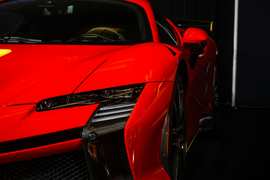
The Fastest Cars in the World 2026: A Deep Dive into Automotive Engineering Excellence
The relentless pursuit of speed has long been the defining characteristic of the automotive industry, driving innovation and pushing the boundaries of what was once thought possible. In 2026, the landscape of high-performance vehicles has reached unprecedented heights, with manufacturers globally competing to produce machines that defy conventional engineering limits. This year’s list of the fastest cars in the world is a testament to this evolution, showcasing a fusion of groundbreaking electric powertrains, hyper-efficient aerodynamics, and materials science that redefines the very concept of velocity.
For enthusiasts and industry analysts alike, the race to the top spot is not merely about bragging rights; it represents a convergence of performance metrics, safety innovations, and technological prowess that shapes the future of automotive design. This comprehensive exploration delves into the ten fastest cars currently available or slated for imminent release in 2026, providing an in-depth analysis of their engineering marvels, performance specifications, and the technological trends that underpin their remarkable capabilities.
SSC Tuatara: The American Contender
Continuing its reign as one of the most formidable machines on the planet, the SSC Tuatara solidifies its position as the fastest production car in the world for 2026. Developed by SSC North America, this hypercar represents the culmination of years of iterative design and relentless testing. Its benchmark top speed of 316 mph (508 km/h) is not merely a number on a spec sheet; it is the result of a meticulously engineered ecosystem where power meets precision.
At the heart of the Tuatara’s performance is its bespoke 5.9-liter, twin-turbocharged V8 engine. This powerplant, developed in collaboration with Nelson Racing Engines, is capable of producing a staggering 1,750 horsepower when fueled with E85 ethanol, or 1,350 horsepower on premium pump gas. However, raw power is meaningless without the means to harness it effectively. The Tuatara’s aerodynamics are a masterclass in fluid dynamics, featuring a low-drag profile that minimizes air resistance while generating sufficient downforce to maintain stability at speeds approaching Mach 0.45.
The engineering team at SSC has invested heavily in advanced composite materials, with the monocoque and body panels constructed almost entirely from carbon fiber. This commitment to lightweight construction ensures an exceptional power-to-weight ratio, which is critical for achieving such extreme velocities. Furthermore, the implementation of sophisticated active aerodynamics, including adaptive rear spoilers and diffusers, allows the car to optimize its aerodynamic profile in real-time, adjusting to varying speed and driving conditions. The cockpit reflects this blend of high-performance engineering and driver-focused design, featuring a digital instrument cluster that provides critical performance data with minimal distraction.
The journey to the Tuatara’s current standing has been marked by a rigorous validation process, including several high-speed runs documented under strict third-party observation. These runs have not only confirmed the car’s top-speed capabilities but have also highlighted its impressive acceleration figures, with the car capable of sprinting from 0 to 60 mph in under 2.5 seconds. The development of the Tuatara underscores a broader trend in the hypercar segment: the integration of advanced digital engineering and real-world testing to validate extreme performance claims.
Bugatti Chiron Super Sport 300+: Refining the Art of Speed
The Bugatti Chiron Super Sport 300+, a successor to the legendary Chiron lineage, continues to define the upper echelons of automotive speed. While its official production-spec top speed remains electronically limited to ensure safety and reliability, the car has unofficially breached the 300 mph barrier, etching its name into history. This achievement is a testament to Bugatti’s unwavering commitment to engineering excellence and its deep understanding of high-performance vehicle dynamics.
Powering this French masterpiece is the iconic 8.0-liter quad-turbocharged W16 engine. In its Super Sport configuration, this colossal powerplant produces a formidable 1,578 horsepower. However, the engineering innovation extends far beyond raw horsepower figures. The transmission system, a bespoke DSG unit, has been optimized to handle the immense torque generated by the W16 engine, ensuring seamless power delivery even at speeds approaching 300 mph.
The aerodynamics of the Chiron Super Sport 300+ represent a significant departure from the standard Chiron. The bodywork has been extended and reshaped to reduce drag, featuring a long-tail design that optimizes airflow over the vehicle. This design philosophy is crucial for high-speed stability, ensuring that the car remains planted and controllable as it slices through the air. The active rear spoiler plays a vital role in this equation, deploying at high speeds to provide the necessary downforce for braking and cornering.
Inside, the cabin blends Bugatti’s characteristic luxury with race-inspired functionality. High-quality materials such as carbon fiber, aluminum, and leather are used extensively, creating an environment that is both opulent and functional. The driver’s instrumentation is a marvel of engineering, with a prominent digital tachometer that dominates the binnacle, flanked by displays that provide critical performance data. The development of the Chiron Super Sport 300+ highlights a trend in the hypercar market where manufacturers are pushing the boundaries of what is possible with internal combustion engines, even as the industry transitions toward electrification.
Hennessey Venom F5: The American Velocity Beast
The Hennessey Venom F5 stands as a proud representation of American automotive innovation, engineered with a singular focus: to achieve mind-bending speeds. Named after the most powerful category of tornado, the Venom F5 is designed to be a road-legal hypercar capable of pushing the boundaries of velocity. Its top-speed target of over 300 mph has been meticulously pursued through a combination of brute force and sophisticated engineering.
Propelling the Venom F5 is a 6.6-liter twin-turbocharged V8 engine, dubbed “Fury.” This bespoke powerplant is capable of generating an astonishing 1,817 horsepower and 1,193 lb-ft of torque, making it one of the most powerful engines ever installed in a road-legal vehicle. This immense power is channeled through a lightweight, custom-built transmission system, ensuring that the car can effectively utilize its full power potential.
The chassis and body of the Venom F5 are constructed primarily from carbon fiber, resulting in a dry weight of approximately 1,360 kg (3,000 lbs). This low weight, combined with the prodigious horsepower output, gives the car an exceptional power-to-weight ratio. The aerodynamic design has been optimized for high-speed stability, featuring a low-drag profile with a manually adjustable rear wing that can be set to optimize either downforce or top speed, depending on the driver’s preference and the driving conditions.
Inside, the Venom F5 offers a blend of race-inspired functionality and luxury. The cabin is trimmed in high-quality materials, including carbon fiber and Alcantara, creating an environment that is both sporty and comfortable. The driver’s instrumentation is designed to provide critical performance data at a glance, with a digital display that showcases speed, RPM, and G-force readings. The development of the Venom F5 underscores the continued evolution of American hypercars, as manufacturers like Hennessey push the envelope of what is possible with internal combustion engine technology.
Koenigsegg Jesko Absolut: Swedish Engineering Precision
The Koenigsegg Jesko Absolut represents the zenith of Swedish engineering, a car designed to challenge the very notion of top speed. Developed by the visionary team at Koenigsegg, this hypercar is engineered to be the fastest production car Koenigsegg has ever built. Its name, “Absolut,” reflects its uncompromising focus on achieving the highest possible velocity in a road-legal package.
At the heart of the Jesko Absolut is a bespoke 5.0-liter twin-turbocharged V8 engine. This powerhouse is capable of producing 1,280 horsepower on standard gasoline and a staggering 1,625 horsepower when fueled with E85 ethanol. The engine is paired with Koenigsegg’s revolutionary Light-Speed Transmission (LST), a nine-speed dual-clutch gearbox that can shift between any gear in less than 20 milliseconds. This engineering marvel allows the car to maintain optimal power delivery across its entire speed range.
The aerodynamics of the Jesko Absolut are a masterclass in low-drag design. Unlike the more track-focused Jesko Attack, the Absolut features a streamlined body with a significantly reduced drag coefficient. The rear wing has been replaced with a stabilizing fin, and the bodywork has been smoothed to minimize air resistance. This design philosophy allows the car to achieve an estimated top speed that could potentially exceed 330 mph, though official testing is ongoing.
The chassis and body are constructed from advanced carbon fiber composites, ensuring exceptional rigidity and a low overall weight. The interior is a testament to Koenigsegg’s attention to detail, featuring a digital instrument cluster that provides critical performance data, including a virtual “Top Speed Mode” display that shows the theoretical maximum speed based on the current gear and road conditions. The development of the Jesko Absolut highlights the trend of hypercar manufacturers pushing the boundaries of aerodynamic efficiency and transmission technology to achieve unprecedented speeds.
Rimac CTwo: The Electric Revolution
The Rimac CTwo, later rebranded as the Nevera, represents a paradigm shift in the world of high-performance vehicles. Developed by Croatian automotive innovator Rimac Automobili, this all-electric hypercar challenges the conventional wisdom that electric vehicles cannot compete with their gasoline-powered counterparts in the realm of ultimate speed. With a production-ready