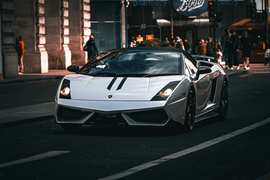
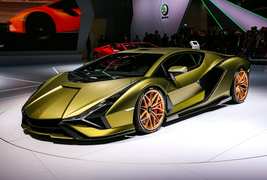
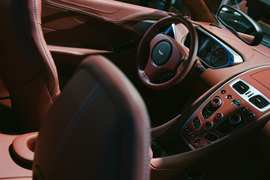
The list of the Top Ten Fastest Cars in the World for 2026 reveals a landscape where combustion engine dominance is being challenged by the electrifying force of next-generation hypercars. This isn’t just about top speed anymore; it’s a showcase of how manufacturers are blending raw power, advanced aerodynamics, and cutting-edge technology to shatter previous benchmarks.
Rimac Nevera: The Electric Titan
Taking the crown in 2026 is the Rimac Nevera, a testament to Croatia’s burgeoning automotive prowess. This all-electric hypercar doesn’t just challenge conventional speed records; it obliterates them. With a reported top speed exceeding 258 mph, the Nevera’s 1,914 horsepower, delivered through four independent electric motors, provides instant torque that pins occupants to their seats. Its 0-60 mph time of under 2 seconds makes it one of the quickest accelerating vehicles ever conceived. Beyond the straight-line speed, the Nevera’s sophisticated torque vectoring and carbon fiber monocoque chassis ensure it handles like a precision instrument, making it as adept on a twisting mountain road as it is on a drag strip.
Koenigsegg Jesko Absolut: The Swedish Speed Demon
Christian von Koenigsegg’s engineering philosophy—”Hugger Speed”—is embodied in the Jesko Absolut. Designed specifically to be the fastest car Koenigsegg will ever produce, this Swedish marvel features a revolutionary aerodynamics package that minimizes drag to an almost unbelievable coefficient of 0.278. Powered by a twin-turbocharged 5.0-liter V8 producing 1,625 horsepower on E85 fuel, the Jesko Absolut is a mechanical masterpiece. Its 9-speed Light Speed Transmission (LST) allows for lightning-fast gear changes, ensuring the engine stays in its powerband. While its theoretical top speed is claimed to be well over 300 mph, real-world testing remains the final arbiter, but all indicators point to it being a serious contender for the outright speed record.
Hennessey Venom F5: The American Powerhouse
John Hennessey has always believed in the “more is more” philosophy, and the Venom F5 is the culmination of that belief. This Texas-built hypercar is powered by a custom-designed 6.6-liter twin-turbocharged V8 dubbed “Fury,” producing a staggering 1,817 horsepower. The F5’s chassis is a carbon fiber monocoque, keeping weight under 1,400 kg, which translates to an astonishing power-to-weight ratio. Hennessey’s stated goal is a top speed exceeding 311 mph (500 km/h), and given the car’s brute force and advanced aerodynamics, it’s a target well within reach. The F5 represents the pinnacle of American internal combustion engine engineering, a final, glorious hurrah for the gasoline-powered supercar.
Bugatti Chiron Super Sport 300+: The Speed Icon
The Bugatti Chiron Super Sport 300+ holds a special place in automotive history as the first production car to officially break the 300 mph barrier, albeit on a modified track and with a forward-rotating tire setup. This French masterpiece is powered by an 8.0-liter quad-turbocharged W16 engine, producing a colossal 1,578 horsepower. The Super Sport 300+ features an extended rear “longtail” design to improve stability at extreme velocities, as well as reduced ride height and optimized airflow. While Bugatti has since retired from the top-speed chase, the Super Sport 300+ remains an icon of speed and luxury, a testament to the engineering prowess of the Molsheim-based manufacturer.
Pininfarina Battista: Italian Elegance Meets Electric Power
Another entry from the burgeoning electric hypercar segment, the Pininfarina Battista combines Italian design flair with cutting-edge electric performance. Designed by the legendary Italian design house, the Battista is a work of art, but its beauty is more than skin deep. It boasts four independent electric motors, one for each wheel, producing a combined 1,900 horsepower and 2,300 Nm of torque. This electric powertrain allows for torque vectoring that can dynamically adjust power to each wheel, providing unprecedented handling capabilities. With a top speed of over 217 mph and a 0-60 mph time of under 2 seconds, the Battista proves that electric cars can be as thrilling and engaging as their gasoline counterparts.
Aston Martin Valkyrie: The F1-Inspired Weapon
The Aston Martin Valkyrie is the result of a collaboration between the British automaker and Formula 1’s Red Bull Racing Advanced Technologies. This hypercar is essentially a road-legal race car, designed with the same aerodynamic principles as an F1 machine. Power comes from a naturally aspirated 6.5-liter V12 engine developed by Cosworth, producing 1,000 horsepower, supplemented by a hybrid system that adds another 160 horsepower. The Valkyrie’s lightweight carbon fiber construction and aggressive aerodynamics allow for downforce figures that rival race cars, making it an incredibly capable track machine. Its top speed is electronically limited to around 217 mph, but its true genius lies in its handling and cornering capabilities.
McLaren Speedtail: The Ultimate Grand Tourer
McLaren’s Speedtail redefines the concept of a hyper-GT. Unlike its more track-focused siblings, the Speedtail is designed for high-speed touring, combining blistering performance with luxury and comfort. Its most striking feature is its unique three-seat layout, with the driver positioned in the center, reminiscent of the McLaren F1. The Speedtail is powered by a hybrid powertrain that produces a combined 1,036 horsepower, allowing it to reach a top speed of 250 mph. Its elongated, teardrop-shaped body is a masterclass in aerodynamics, minimizing drag to achieve its remarkable velocity. The Speedtail is a testament to McLaren’s ability to blend performance and luxury, creating a car that is both exhilarating to drive and comfortable to travel in.
Gordon Murray Automotive T.50: The Driver’s Car
Gordon Murray, the legendary designer of the McLaren F1, set out to create the ultimate driver’s car with the T.50. This mid-engined supercar is powered by a naturally aspirated 3.9-liter V12 engine developed by Cosworth, producing 654 horsepower. While its power output may seem modest compared to some on this list, the T.50’s brilliance lies in its weight and aerodynamics. It weighs just 986 kg, making it incredibly agile and responsive. Furthermore, it features a massive rear fan that actively manages airflow under and over the car, generating downforce without the need for large wings. The T.50 is a celebration of pure driving pleasure, a car that prioritizes driver engagement above all else. Its top speed is estimated to be around 217 mph, but its true magic lies in its handling and feedback.
Ferrari SF90 Stradale: Maranello’s Hybrid Masterpiece
The Ferrari SF90 Stradale marks a significant moment in the history of the Prancing Horse, being the first plug-in hybrid production car from Maranello. This mid-engined supercar combines a twin-turbocharged 4.0-liter V8 with three electric motors, producing a combined 986 horsepower. The electric motors can provide additional power for acceleration or allow the car to run on electric power alone for short distances, making it both powerful and relatively efficient. The SF90 Stradale features advanced aerodynamics, including active spoilers and diffusers, to manage airflow at high speeds. Its top speed is electronically limited to 211 mph, but its true performance lies in its ability to deliver instant torque and seamless power delivery through its sophisticated hybrid system.
Rimac CTwo: The Precursor to the Nevera
Although superseded by the Nevera, the Rimac CTwo deserves mention for its groundbreaking achievements in electric hypercar technology. This Croatian marvel laid the groundwork for the Nevera’s success, showcasing Rimac’s vision for the future of high-performance vehicles. With four independent electric motors producing a combined 1,914 horsepower, the CTwo was capable of 0-60 mph in under 2 seconds and a top speed of over 258 mph. Its advanced torque vectoring system and carbon fiber monocoque chassis demonstrated that electric powertrains could deliver supercar-level performance. The CTwo proved that the future of the fastest cars in the world would be electric, paving the way for the Nevera to claim the top spot in 2026.
Emerging Trends in the World of Fast Cars for 2026
The 2026 list of the fastest cars in the world highlights several key trends that are shaping the future of automotive engineering:
Electrification is King: The most significant trend is the rise of electric hypercars. With instant torque, rapid acceleration, and zero tailpipe emissions, electric powertrains are proving to be the ultimate solution for high-performance vehicles. Manufacturers are investing heavily in battery technology and electric motor development, pushing the boundaries of what’s possible with electric propulsion.
Aerodynamic Optimization: Achieving extreme speeds requires meticulous aerodynamic design. Manufacturers are utilizing computational fluid dynamics (CFD) and wind tunnel testing to create vehicles that minimize drag while maximizing downforce. Active aerodynamic elements, such as deployable spoilers and adjustable diffusers, are becoming standard features, allowing cars to