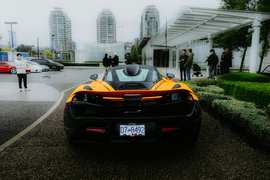
The 10 Fastest Cars in the World: 2026 Speed Supremacy Confirmed
By Vagif Gadimov
October 22, 2024 6:28 am
The automotive world continues its relentless pursuit of the ultimate metric: speed. In 2026, the landscape of hypercars has evolved dramatically, moving beyond mere velocity to encompass a complex interplay of aerodynamics, power-to-weight ratios, and cutting-edge electrification. What was once the exclusive domain of internal combustion engines has now welcomed sophisticated hybrid and all-electric powertrains, blurring the lines between race track dominance and street-legal legality. This evolution hasn’t just made cars faster; it has redefined what we consider possible for a production automobile.
For the dedicated enthusiast, the collector, and the engineer, this era represents a golden age. We are witnessing manufacturers push beyond the 300 mph barrier with a regularity that would have seemed science fiction just a decade ago. Yet, this pursuit of the absolute limit is not without its challenges. Verifying these astronomical speeds, ensuring safety at these velocities, and navigating the complex regulatory frameworks that govern their use create a fascinating backdrop to the engineering marvels we are about to explore.
This deep dive into the world’s fastest cars of 2026 will not just list specifications. It will analyze the innovations, the engineering philosophies, and the sheer audacity required to create these machines. We will look at the cars that are currently setting benchmarks, those that are pushing the theoretical boundaries, and the technologies that are making it all possible. From the thunderous V16s of traditional giants to the silent, terrifying acceleration of electric predators, the race for the ultimate title is hotter than ever.
Criteria for Automotive Excellence
When compiling a list of the fastest cars in the world for 2026, the criteria extend far beyond a single speedometer reading. The modern hypercar is a synthesis of conflicting demands: it must be street-legal, yet capable of track-shattering performance; it must be luxurious, yet built with aerospace-grade lightweight materials; and it must be reliable, despite operating at the very edge of physics. To qualify for this elite echelon, a vehicle must demonstrate mastery in several key areas.
The Benchmark of Maximum Velocity: The verified top speed remains the non-negotiable entry ticket. However, in 2026, this benchmark is increasingly subject to scrutiny. No longer is a single, one-way run accepted as definitive proof. The industry standard has shifted to require two-way runs to account for wind and gradient variables, ensuring that the celebrated figure represents the car’s true potential under controlled, repeatable conditions. This has weeded out many ambitious claims and solidified the positions of the true record holders.
The Physics of Acceleration: While top speed defines the peak, acceleration defines the character. The 0-60 mph (or 0-100 km/h) time is the immediate gratification metric, often dictated by the marriage of power and traction. For 2026, with the rise of electric drivetrains, these figures have dipped into the sub-two-second realm, challenging the very notion of grip. The ability of a car to translate raw horsepower into forward motion without spinning its wheels is a testament to its chassis engineering and electronic management systems.
Dynamic Handling and Stability: A car that cannot corner at 100 mph is merely a dragster with pretensions of grandeur. True hypercar status demands exceptional handling, aerodynamic stability, and braking performance that can scrub off triple-digit speeds safely. The best cars of 2026 offer a level of downforce and chassis responsiveness that makes them feel planted and predictable, even when pushed to their limits on a winding road or a high-speed circuit.
Real-World Usability and Compliance: This is the factor that separates the exotics from the relics. A car that spends 99% of its life in a climate-controlled garage is an impressive feat of engineering, but it is not a complete package. For 2026, the most desirable vehicles offer a balance of their extreme performance with a degree of everyday comfort, safety features, and emissions compliance that allows them to be driven, appreciated, and even occasionally used for a spirited drive on public roads. This balance is the key to long-term relevance and desirability.
The Pantheon of Speed: Top Contenders in 2026
The 2026 landscape is a testament to the diverse engineering philosophies battling for supremacy. Traditionalists continue to refine the internal combustion engine, while disruptors are proving that electricity is the ultimate force multiplier.
Koenigsegg Jesko Absolut: The Swedish Marque’s Ultimate Weapon
When Christian von Koenigsegg sets his sights on a target, the automotive world listens. The Jesko Absolut is not merely an evolution of the brand’s hypercar philosophy; it is a dedicated speed machine designed with a singular purpose: to be the fastest production car ever made. With a theoretical top speed that borders on the unbelievable, the Absolut represents the apex of ICE (Internal Combustion Engine) technology pushed to its absolute limit.
At its heart lies the heart-stopping heart of Koenigsegg’s engineering prowess: a 5.0-liter twin-turbocharged V8 engine. This isn’t just any V8; it’s a jewel of precision engineering capable of producing a staggering 1,600 horsepower when fueled with E85 ethanol. This colossal output is delivered through Koenigsegg’s revolutionary 9-speed Light Speed Transmission (LST). This revolutionary gearbox allows for lightning-fast gear changes, capable of shifting from seventh to eighth gear in just 22 milliseconds. More importantly, the LST features a “skip-shift” capability, enabling the car to jump directly to top gear from a standstill, bypassing intermediate gears for the most efficient, high-speed runs.
However, the true genius of the Jesko Absolut lies in its aerodynamics. While its sibling, the Jesko Attack, is designed for downforce and track prowess, the Absolut is a masterclass in drag reduction. The bodywork has been painstakingly sculpted to achieve an astonishing drag coefficient of just 0.278. This is accomplished through a combination of a long-tail rear design, hidden headlights, smooth underbody paneling, and the removal of the massive rear wing found on the Attack model. The result is a car that cuts through the air with surgical precision, requiring less power to maintain extreme velocity.
While Koenigsegg has yet to conduct an official top-speed run to validate the Absolut’s theoretical maximum of over 330 mph, simulations and engineering calculations suggest that this Swedish marvel is indeed the car to beat. It represents the final chapter of the pure ICE hypercar, a symphony of noise, vibration, and brutal acceleration that electric vehicles, for all their technical brilliance, cannot yet replicate. The 2026 automotive landscape eagerly awaits the day when the Absolut takes its final, record-breaking run.
Bugatti Chiron Super Sport 300+: The Pioneer of the Hyper-Velocity Club
The Bugatti Chiron Super Sport 300+ will forever be etched in automotive history as the first production-derived car to break the mythical 300 mph barrier. While the official record remains a subject of technical debate, the 2026 community recognizes this vehicle as a pivotal moment in the pursuit of speed, a testament to the engineering might of the Volkswagen Group and the Bugatti legacy.
This leviathan is powered by the legendary quad-turbocharged 8.0-liter W16 engine, a quad-turbocharged behemoth that defines the term “powerplant.” In its Super Sport configuration, this engine delivers a breathtaking 1,600 horsepower and a colossal 1,600 Nm (1,180 lb-ft) of torque. This power is channeled through a seven-speed dual-clutch transmission, which, while a marvel of engineering, is not the star of the show. The star is the car’s aerodynamic optimization for top speed.
Unlike the standard Chiron, the Super Sport 300+ features an elongated rear end, known as a “longtail,” which smooths airflow and reduces drag. The front end is also optimized for high-speed stability, and the car rides on specialized Michelin Pilot Sport Cup 2 tires capable of withstanding the incredible forces generated at velocity.
The historic run itself, conducted at Volkswagen’s Ehra-Lessien proving ground, saw the prototype reach a verified two-way average of 273.4 mph, with a peak speed of 304.77 mph. However, the production version, limited to 30 units, is electronically limited to 273 mph for safety reasons. This limitation does little to diminish the car’s legendary status, as it remains a tangible symbol of the era when man first broke the 300 mph barrier in a road-legal machine. As we look back from 2026, the Chiron Super Sport 300+ stands as a monument to the ambition and engineering excellence of the early 2020s hypercar wars.
Hennessey Venom F5: The American Hypercar Aspiration
John Hennessey has always been a man of bold ambitions, and the Venom F5 is the ultimate realization of his dream to build the fastest American production car in the world. Named after the most powerful category of tornado, the F5 is designed to tear through the atmosphere with the same ferocity as its namesake. By 2026, the Venom F5 has evolved from a concept into a production reality, solidifying its place among the elite hypercars.


 The 10 Fastest Cars in the World: 2026 Speed Supremacy Confirmed
By Vagif Gadimov
October 22, 2024 6:28 am
The automotive world continues its relentless pursuit of the ultimate metric: speed. In 2026, the landscape of hypercars has evolved dramatically, moving beyond mere velocity to encompass a complex interplay of aerodynamics, power-to-weight ratios, and cutting-edge electrification. What was once the exclusive domain of internal combustion engines has now welcomed sophisticated hybrid and all-electric powertrains, blurring the lines between race track dominance and street-legal legality. This evolution hasn’t just made cars faster; it has redefined what we consider possible for a production automobile.
For the dedicated enthusiast, the collector, and the engineer, this era represents a golden age. We are witnessing manufacturers push beyond the 300 mph barrier with a regularity that would have seemed science fiction just a decade ago. Yet, this pursuit of the absolute limit is not without its challenges. Verifying these astronomical speeds, ensuring safety at these velocities, and navigating the complex regulatory frameworks that govern their use create a fascinating backdrop to the engineering marvels we are about to explore.
This deep dive into the world’s fastest cars of 2026 will not just list specifications. It will analyze the innovations, the engineering philosophies, and the sheer audacity required to create these machines. We will look at the cars that are currently setting benchmarks, those that are pushing the theoretical boundaries, and the technologies that are making it all possible. From the thunderous V16s of traditional giants to the silent, terrifying acceleration of electric predators, the race for the ultimate title is hotter than ever.
Criteria for Automotive Excellence
When compiling a list of the fastest cars in the world for 2026, the criteria extend far beyond a single speedometer reading. The modern hypercar is a synthesis of conflicting demands: it must be street-legal, yet capable of track-shattering performance; it must be luxurious, yet built with aerospace-grade lightweight materials; and it must be reliable, despite operating at the very edge of physics. To qualify for this elite echelon, a vehicle must demonstrate mastery in several key areas.
The Benchmark of Maximum Velocity: The verified top speed remains the non-negotiable entry ticket. However, in 2026, this benchmark is increasingly subject to scrutiny. No longer is a single, one-way run accepted as definitive proof. The industry standard has shifted to require two-way runs to account for wind and gradient variables, ensuring that the celebrated figure represents the car’s true potential under controlled, repeatable conditions. This has weeded out many ambitious claims and solidified the positions of the true record holders.
The 10 Fastest Cars in the World: 2026 Speed Supremacy Confirmed
By Vagif Gadimov
October 22, 2024 6:28 am
The automotive world continues its relentless pursuit of the ultimate metric: speed. In 2026, the landscape of hypercars has evolved dramatically, moving beyond mere velocity to encompass a complex interplay of aerodynamics, power-to-weight ratios, and cutting-edge electrification. What was once the exclusive domain of internal combustion engines has now welcomed sophisticated hybrid and all-electric powertrains, blurring the lines between race track dominance and street-legal legality. This evolution hasn’t just made cars faster; it has redefined what we consider possible for a production automobile.
For the dedicated enthusiast, the collector, and the engineer, this era represents a golden age. We are witnessing manufacturers push beyond the 300 mph barrier with a regularity that would have seemed science fiction just a decade ago. Yet, this pursuit of the absolute limit is not without its challenges. Verifying these astronomical speeds, ensuring safety at these velocities, and navigating the complex regulatory frameworks that govern their use create a fascinating backdrop to the engineering marvels we are about to explore.
This deep dive into the world’s fastest cars of 2026 will not just list specifications. It will analyze the innovations, the engineering philosophies, and the sheer audacity required to create these machines. We will look at the cars that are currently setting benchmarks, those that are pushing the theoretical boundaries, and the technologies that are making it all possible. From the thunderous V16s of traditional giants to the silent, terrifying acceleration of electric predators, the race for the ultimate title is hotter than ever.
Criteria for Automotive Excellence
When compiling a list of the fastest cars in the world for 2026, the criteria extend far beyond a single speedometer reading. The modern hypercar is a synthesis of conflicting demands: it must be street-legal, yet capable of track-shattering performance; it must be luxurious, yet built with aerospace-grade lightweight materials; and it must be reliable, despite operating at the very edge of physics. To qualify for this elite echelon, a vehicle must demonstrate mastery in several key areas.
The Benchmark of Maximum Velocity: The verified top speed remains the non-negotiable entry ticket. However, in 2026, this benchmark is increasingly subject to scrutiny. No longer is a single, one-way run accepted as definitive proof. The industry standard has shifted to require two-way runs to account for wind and gradient variables, ensuring that the celebrated figure represents the car’s true potential under controlled, repeatable conditions. This has weeded out many ambitious claims and solidified the positions of the true record holders.