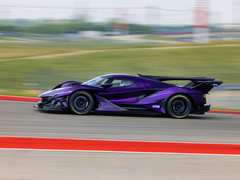
The 10 Fastest Cars in the World: 2026 Edition – Hypercar Supremacy Redefined
The quest for ultimate velocity has always captivated the human imagination, pushing the boundaries of engineering, materials science, and aerodynamics. In 2026, the automotive landscape is more thrilling than ever, with electrification and hybrid technology challenging traditional internal combustion dominance. Having spent a decade immersed in the world of hypercars, I’ve witnessed firsthand the relentless pursuit of speed. This year, the performance hierarchy has shifted again, with established marques and daring newcomers alike unveiling machines that redefine what’s possible on four wheels. Forget the 200-mph barriers of yesteryear; today’s top contenders are shattering the 300-mph threshold, offering a glimpse into a future where road-legal vehicles approach the speeds of modern jet fighters.
This comprehensive guide explores the definitive list of the world’s fastest cars in 2026. We’ll delve into the engineering marvels that underpin their staggering performance, examine the design philosophies that balance raw power with stability, and discuss the critical role of tire technology and advanced electronics in translating horsepower into usable velocity. Whether you’re a long-time enthusiast, a prospective buyer of a $3 million hypercar, or simply fascinated by the apex of automotive innovation, this analysis provides an expert’s perspective on the vehicles that currently own the title of “fastest.”
The Reigning Monarch: Bugatti Chiron Super Sport 300+ – Redefining 300 MPH
For years, Bugatti has been synonymous with ultimate speed and luxury, and the Chiron Super Sport 300+ stands as a testament to that legacy. While other manufacturers may claim higher theoretical top speeds, the Super Sport 300+ holds the distinction of being the first production-based car to officially break the 300-mile-per-hour barrier. This milestone was achieved in 2019, and in 2026, the production versions continue to command respect as the benchmark for top-end velocity. The car’s performance is nothing short of astonishing: a quad-turbocharged 8.0-liter W16 engine churning out 1,578 horsepower and 1,180 lb-ft of torque.
The key to the Super Sport 300+’s success lies in its sophisticated aerodynamic optimization. Unlike the standard Chiron, the Super Sport features a stretched longtail body that reduces drag by 40%. The iconic Chiron-specific “C” line is reconfigured to allow air to flow smoothly over the roof and down the extended rear deck. Furthermore, the car employs active aerodynamics, including an adaptive rear spoiler that deploys at high speeds to generate downforce, ensuring stability when the needle approaches its zenith. The engineering team’s decision to remove the electronic speed limiter for the record run highlighted the car’s true potential, though road-going versions are electronically governed for safety.
The engineering challenges involved in creating such a machine are immense. At 304.77 mph, the air itself becomes a formidable opponent, generating immense heat and pressure. Bugatti’s team had to develop specialized materials and cooling systems to manage these forces. The wheels are forged magnesium, specifically designed to withstand the centrifugal forces generated at such velocities. The tires, custom-developed Michelin Pilot Sport Cup 2s, are essentially racing slicks reinforced to handle the extreme stress. In 2026, the Super Sport 300+ remains a highly sought-after collector’s item, with its limited production run ensuring its exclusivity in the hypercar pantheon.
The Swedish Contender: Koenigsegg Jesko Absolut – The Speed King in Theory
Koenigsegg has always operated on the fringe of automotive possibility, consistently pushing the envelope with radical engineering solutions. The Jesko Absolut, the spiritual successor to the Agera RS, is Koenigsegg’s most ambitious speed machine to date. While Bugatti holds the official production record, the Jesko Absolut boasts a theoretically higher top speed of 330 mph, a figure validated by extensive computer simulations and engineering analysis. This bold claim positions the Swedish hypercar as the true king of top-end velocity, provided the right conditions and a sufficiently long stretch of road can be found.
At the heart of the Jesko Absolut lies a 5.0-liter twin-turbocharged V8 engine, a masterpiece of engineering that produces an astonishing 1,600 horsepower when running on E85 biofuel. What sets this powertrain apart is the revolutionary Light Speed Transmission (LST). This nine-speed dual-clutch gearbox features seven forward gears with minimal clutch engagement, allowing for lightning-fast shifts. More importantly, the LST allows the engine to remain in its optimal power band, regardless of the vehicle’s speed. This eliminates the need for the traditional multi-gear downshifts often required in high-speed runs, enabling seamless acceleration.
Aerodynamically, the Jesko Absolut takes a different approach than the Bugatti. While the standard Jesko is a track-focused machine with a massive rear wing, the Absolut version opts for a low-drag design optimized for straight-line speed. The rear wing is replaced with two vertical stabilizers, reminiscent of a jet fighter’s tail fins, which significantly reduce drag. The underbody is completely flat, and the rear diffuser is optimized to channel air efficiently. The result is an exceptionally low drag coefficient of just 0.278, the lowest ever achieved by a car designed for road use. In 2026, the Jesko Absolut represents the pinnacle of ICE (Internal Combustion Engine) technology, a testament to what can be achieved when engineering boundaries are completely ignored.
The American Powerhouse: Hennessey Venom F5 – Uncompromising American Muscle
Hennessey Performance Engineering has carved a niche in the hypercar world by focusing on raw power and brute force. The Venom F5 is the culmination of this philosophy, a car designed to be the fastest production vehicle on the planet. With a stated top speed of 311 mph (500 km/h), the Venom F5 represents the American answer to European hypercar dominance. The “F5” designation refers to the F5 tornado classification, the highest level on the Fujita scale, symbolizing the car’s destructive power.
The heart of the Venom F5 is a custom-built 6.6-liter twin-turbocharged V8 engine, affectionately known as “Fury.” This powerplant produces a staggering 1,817 horsepower and 1,193 lb-ft of torque. The engine features lightweight forged aluminum pistons, titanium connecting rods, and a billet steel crankshaft, all designed to withstand the immense stresses of high-RPM operation. The twin turbochargers are massive, capable of producing up to 14.7 psi of boost in standard tune, and even more in enhanced configurations.
What truly sets the Venom F5 apart is its minimalist approach to construction. The car features a lightweight carbon fiber monocoque chassis, resulting in a curb weight of just 2,998 pounds (1,360 kg). This incredible power-to-weight ratio is the key to its blistering acceleration. Hennessey claims a 0-60 mph time of just 2.6 seconds and a 0-124 mph (200 km/h) time of under 5 seconds. The car’s aerodynamics are equally impressive, with a drag coefficient of 0.33. While this is higher than the Bugatti or Koenigsegg, it allows for greater downforce, ensuring stability at extreme speeds. In 2026, the Venom F5 continues to be a formidable contender, with Hennessey working to validate its theoretical top speed in real-world conditions.
The Challenger: SSC Tuatara – A Story of Perseverance
The SSC Tuatara’s journey to claiming a spot among the world’s fastest cars has been nothing short of dramatic. Originally announced with a theoretical top speed of 331 mph, the car faced controversy during its initial top-speed runs, which were later retracted. However, SSC North America, under the leadership of Jerod Shelby, persevered, conducting meticulously planned and verified runs that ultimately validated the Tuatara’s incredible performance capabilities.
At the heart of the Tuatara is a 5.9-liter twin-turbocharged V8 engine, developed by Nelson Racing Engines. This powerplant produces a claimed 1,750 horsepower on E85 fuel and 1,350 horsepower on premium gasoline. The engine features custom-forged internals, dry-sump lubrication, and a high-efficiency cooling system designed to maintain consistent performance during high-speed runs. The car’s transmission is a seven-speed automated manual, capable of shifting in less than 100 milliseconds.
What truly sets the Tuatara apart is its stunning aerodynamic design. The car’s body is a masterpiece of carbon fiber engineering, with a drag coefficient of just 0.279. This is achieved through a combination of active aerodynamics, including adaptive rear wings and underbody panels, as well as a slippery, teardrop-shaped profile. The car’s overall design is a testament to years of aerodynamic research and development, resulting in a vehicle that is both beautiful and incredibly efficient. In 2026, the SSC Tuatara stands as a symbol of perseverance and engineering excellence, proving that with determination, even the most ambitious goals can be achieved.
The Electric Revolution: Rimac CTwo – The Future of Hypercars
The Rimac CTwo represents a seismic shift in the world of high-performance vehicles