The Quest for 300 MPH: Analyzing the World’s Fastest Cars in 2026
The automotive industry exists in a perpetual state of motion, driven by a relentless pursuit of speed and engineering excellence. For decades, the Holy Grail of automotive performance has been the 300-mile-per-hour barrier. Achieving this feat requires a confluence of raw power, aerodynamic finesse, and cutting-edge materials science. As we navigate the mid-2020s, the landscape of hypercar performance has evolved dramatically. The once-exclusive club of 300-mph-capable vehicles has expanded, thanks to electrification and radical engineering philosophies.
This analysis delves into the current hierarchy of the world’s fastest cars, examining the technological marvels that define the apex of automotive speed. We will explore not only the headline figures but also the engineering philosophies that enable these machines to defy conventional physics, offering insights relevant to collectors, investors, and engineering enthusiasts alike.
The Reigning Champion: Bugatti Chiron Super Sport 300+
Topping the list of the fastest road-legal production cars remains the Bugatti Chiron Super Sport 300+. While the marque has since introduced the Bolide (a track-only machine) and the Mistral roadster, the Super Sport 300+ etched its name in history by being the first production car to eclipse the 300-mph threshold.
Technical Specifications and Engineering Philosophy
The performance of the Chiron Super Sport 300+ is rooted in its colossal 8.0-liter quad-turbocharged W16 engine. This powerplant, an engineering masterpiece in its own right, produces a staggering 1,578 horsepower and 1,180 lb-ft of torque. However, raw power alone does not guarantee speed. Bugatti’s engineers meticulously optimized the aerodynamics of the Super Sport variant.
The design eschews the aggressive rear wing of the standard Chiron in favor of a streamlined, elongated tail section—a design feature known as a “longtail.” This modification reduces drag significantly, allowing the car to slip through the air more efficiently. Furthermore, the car utilizes specialized Michelin Pilot Sport Cup 2 tires, specially developed to withstand the extreme centrifugal forces generated at speeds approaching 310 mph. The psychological barrier of the 300-mph mark was shattered on the Ehra-Lessien test track, a feat that cemented Bugatti’s legacy in the annals of speed.
Market Position and Investment Value
As of 2026, the Chiron Super Sport 300+ is a sold-out model, with production limited to just 30 units. Its rarity, combined with its historical significance, makes it one of the most valuable modern hypercars on the secondary market. Prices for these vehicles have appreciated considerably since their initial sale, reflecting their status as rolling works of art and engineering milestones. For collectors seeking a piece of automotive history, the Chiron Super Sport 300+ represents the pinnacle of the internal combustion era.
The Swedish Contender: Koenigsegg Jesko Absolut
If the Bugatti represents the refinement of the internal combustion engine, the Koenigsegg Jesko Absolut represents its ultimate evolution. Developed by the visionary Christian von Koenigsegg, the Jesko Absolut is engineered with a singular focus: to achieve the highest possible top speed without compromising stability.
Engineering Excellence and Aerodynamic Mastery
The heart of the Jesko Absolut is a revolutionary 5.0-liter twin-turbocharged V8 engine. What sets this engine apart is its 9-speed multi-clutch transmission, dubbed the “Light Speed Transmission” (LST). This innovative gearbox allows for lightning-fast gear changes, enabling the car to reach its theoretical top speed with unprecedented efficiency.
The Absolut variant features an exceptionally low drag coefficient of 0.278, achieved through a combination of a long rear bodywork, a fixed rear wing (optimized for downforce rather than drag reduction), and smooth underbody panels. Koenigsegg’s simulations suggest a theoretical top speed exceeding 330 mph, though verifying this in the real world presents significant challenges related to tire technology and track length.
Market Dynamics
Koenigsegg production is famously bespoke and limited. The Jesko, in its various forms (including the track-focused Jesko Attack), commands a price tag north of $3 million. Its exclusivity and the engineering prowess displayed by the Swedish manufacturer make it a highly sought-after asset. Unlike traditional manufacturers, Koenigsegg maintains a direct relationship with its clients, often involving extensive personalization processes that further enhance the car’s value.
The American Challenger: SSC Tuatara
The journey of the SSC Tuatara has been marked by controversy and triumph. Following a heavily publicized top-speed run that was later retracted due to data anomalies, SSC (formerly Shelby SuperCars) returned with a meticulously engineered vehicle that silenced the doubters.
Technological Innovation and Record Verification
The Tuatara is powered by a bespoke 5.9-liter twin-turbocharged V8 engine, developed in collaboration with Nelson Racing Engines. In its most potent specification, this engine produces a staggering 1,750 horsepower when fueled with E85 ethanol. The car’s lightweight carbon fiber monocoque and advanced aerodynamic package contribute to its formidable performance.
In January 2021, the SSC Tuatara achieved a verified two-way average speed of 282.9 mph at the Johnny Bohmer Proving Grounds in Florida. While this figure did not eclipse the 300-mph mark, it stands as a testament to the car’s incredible capabilities. SSC continues to refine the vehicle, with ongoing testing aimed at pushing the boundaries even further. The Tuatara represents the American spirit of innovation, demonstrating that world-class hypercars can emerge from independent manufacturers challenging the established European dominance.
The Electric Revolution: Rimac Nevera
The rise of electrification has fundamentally reshaped the hypercar landscape. The Rimac Nevera, a Croatian-built electric hypercar, stands as the most potent proof of this paradigm shift.
Performance Metrics and Electric Superiority
The Nevera is powered by four independent electric motors, one for each wheel. This configuration allows for instantaneous torque vectoring and all-wheel-drive traction control that is orders of magnitude more precise than traditional mechanical systems. The combined output of these motors is an astonishing 1,914 horsepower and 1,741 lb-ft of torque.
In terms of straight-line acceleration, the Nevera is simply breathtaking. It holds numerous production car acceleration records, including the 0-60 mph sprint in a mere 1.74 seconds and the quarter-mile in 8.25 seconds. While its top speed of 258 mph is lower than that of the gasoline-powered hypercars on this list, its acceleration prowess is unmatched. Furthermore, the Nevera’s advanced battery technology and thermal management systems allow it to perform repeated high-speed runs without the power degradation often experienced by electric vehicles.
Market Appeal
Priced at approximately $2.4 million, the Nevera offers a blend of hypercar performance and daily drivability that is rare in this segment. Its technological sophistication, combined with its stunning design and sustainable credentials, has attracted a discerning clientele. As the world transitions towards electric mobility, the Nevera serves as a beacon of what is possible when performance engineering meets electrification.
The Italian Masterpiece: Pininfarina Battista
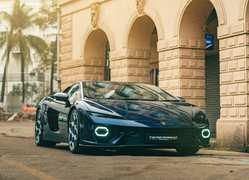
Sharing its underlying technology with the Rimac Nevera, the Pininfarina Battista offers a distinctly Italian interpretation of electric hypercar performance. Named after Battista “Pinin” Farina, the founder of the iconic design house, the Battista is a testament to the enduring power of Italian automotive aesthetics.
Design and Craftsmanship
While the Battista shares the Nevera’s powertrain, its bodywork and interior design are entirely unique. The car is a masterpiece of aerodynamic sculpture, with flowing lines and dramatic curves that are characteristic of Pininfarina’s design philosophy. The interior is equally impressive, featuring sustainable luxury materials and an obsessive attention to detail.
Performance-wise, the Battista offers similar blistering acceleration to the Nevera, with a top speed of 217 mph. Its focus, however, is less on outright speed records and more on delivering a sublime driving experience that combines breathtaking performance with Italian elegance. As one of the first luxury electric hypercars, the Battista holds a special place in the evolution of the automotive industry.
The British Hybrid Icon: Aston Martin Valkyrie
The Aston Martin Valkyrie represents a unique collaboration between a luxury automotive brand and a Formula 1 constructor, Red Bull Racing Advanced Technologies. The result is a road-legal race car that blurs the lines between track machinery and road-going vehicle.
Engineering Prowess and Aerodynamic Innovation
The Valkyrie is powered by a naturally aspirated 6.5-liter V12 engine, developed in collaboration with Cosworth. This bespoke engine produces 1,000 horsepower on its own, but when combined with a hybrid KERS (Kinetic Energy Recovery System), the total output reaches an astonishing 1,160 horsepower. The engine redlines at a dizzying 11,100 rpm, providing a soundtrack that is pure motorsport theater.
Aerodynamically, the Valkyrie is a marvel. It features an aggressive underbody tunnel design that generates massive downforce, allowing the car to corner at incredible speeds. The bodywork is sculpted to channel air with maximum efficiency, creating a car that is as visually dramatic as it is dynamically capable.
Market Context
The Valkyrie is a limited-production vehicle, with only 150 road-legal examples planned. Its exclusivity, combined with its F1-derived technology and