



The quest for velocity has long fueled the automotive industry, pushing engineers to redefine the boundaries of performance and design. As we navigate 2026, the landscape of hypercars has evolved dramatically, blending traditional combustion power with electric innovation. Below is a comprehensive exploration of the top 10 fastest cars in the world, each a marvel of modern engineering and a testament to human ingenuity in the pursuit of speed.
Hennessey Venom F5: The Texas Challenger
The Hennessey Venom F5 stands as a beacon of American automotive ambition. Developed by Hennessey Special Vehicles in Texas, the Venom F5 is engineered not just to compete, but to dominate the realm of top-speed supremacy. Its name, derived from the F5 tornado classification—the most intense category of tornado—evokes the raw, untamable power that lies beneath its carbon fiber skin. This hypercar represents a no-compromise approach to performance, where every curve and vent serves a purpose in the quest for velocity.
At the heart of the Venom F5 beats a twin-turbocharged 6.6-liter V8 engine, affectionately nicknamed “Fury.” This power unit is capable of producing a staggering 1,817 horsepower and 1,617 Nm of torque. Mated to a seven-speed semi-automatic transmission, the Venom F5 rockets from 0 to 60 mph in a mere 2.6 seconds. However, its true calling is revealed at higher velocities. The car is designed to exceed 310 mph (500 km/h), a feat that few vehicles can even approach. This pursuit of extreme speed is supported by a feather-light carbon fiber chassis, which ensures the car maintains aerodynamic stability even at velocities that challenge the laws of physics. The attention to detail in its construction reflects the expertise of a team dedicated to building one of the most extreme performance machines ever conceived.
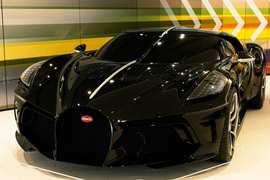 Bugatti Chiron Super Sport: The Epitome of Speed and Luxury
The Bugatti Chiron Super Sport represents the zenith of hypercar evolution, seamlessly blending Bugatti’s legendary luxury with unprecedented speed capabilities. As an evolution of the iconic Chiron lineage, the Super Sport pushes the boundaries of what was previously thought possible in a road-legal production car. This vehicle is not merely a mode of transportation; it is a rolling sculpture of engineering excellence, designed for those who demand the ultimate in performance and refinement.
The heart of the Chiron Super Sport is a quad-turbocharged 8.0-liter W16 engine, an engineering marvel that produces a colossal 1,600 horsepower. This immense power is channeled through a seven-speed dual-clutch transmission, enabling the car to achieve a top speed of 273 mph (440 km/h). What sets the Super Sport apart is its extended “longtail” bodywork, which optimizes aerodynamics for high-speed stability. This design innovation, combined with the car’s sophisticated all-wheel-drive system, ensures that the immense power is delivered to the road with precision and control. The Chiron Super Sport is a testament to Bugatti’s enduring legacy in the world of automotive speed, offering an experience that is both exhilarating and supremely comfortable.
SSC Tuatara: Redefining Speed Records
The SSC Tuatara, produced by SSC North America (formerly Shelby SuperCars), is a hypercar engineered with one primary objective: to shatter speed records. Since its introduction, the Tuatara has been at the forefront of the hypercar arms race, pushing the envelope of what is achievable in terms of straight-line speed. This American-made machine is a testament to innovation and determination, representing the pinnacle of modern automotive engineering.
At the core of the Tuatara is a 5.9-liter twin-turbocharged flat-plane V8 engine, developed in collaboration with Nelson Racing Engines. This powertrain is capable of producing an astonishing 1,750 horsepower on E85 fuel. The car’s lightweight carbon fiber construction, weighing in at just 1,247 kg (2,750 lbs), ensures an exceptional power-to-weight ratio. This engineering focus allows the Tuatara to achieve remarkable acceleration figures, including a 0-60 mph time of just 2.5 seconds. While the car’s controversial top-speed runs have been the subject of much discussion, its engineering prowess is undeniable. The Tuatara represents the relentless pursuit of speed, a machine built to challenge the very definition of automotive performance. Its innovative design and advanced aerodynamics make it a significant player in the hypercar arena.
Bugatti Veyron 16.4 Super Sport: The Predecessor That Set the Standard
The Bugatti Veyron 16.4 Super Sport holds a legendary status in the annals of automotive history. As the most potent iteration of the Veyron lineage, it redefined the concept of a production hypercar upon its debut. This French marvel combined the opulence of Bugatti with earth-shattering performance, setting a benchmark that few could match for years to come.
The heart of the Veyron Super Sport is the iconic quad-turbocharged 8.0-liter W16 engine. In this iteration, the engine was upgraded to produce 1,200 horsepower, a figure that was simply astonishing at the time of its release. This power is delivered through a seven-speed dual-clutch transmission to an advanced all-wheel-drive system, ensuring that the Veyron could harness its immense power effectively. The Super Sport version featured aerodynamic enhancements, including a revised front fascia and a unique double-diffuser rear setup, which helped it achieve a top speed of 268 mph (431 km/h). The Veyron 16.4 Super Sport is more than just a fast car; it is a symbol of engineering excellence and a testament to Bugatti’s vision of creating the ultimate automotive machine.
Bugatti Chiron Super Sport: The Epitome of Speed and Luxury
The Bugatti Chiron Super Sport represents the zenith of hypercar evolution, seamlessly blending Bugatti’s legendary luxury with unprecedented speed capabilities. As an evolution of the iconic Chiron lineage, the Super Sport pushes the boundaries of what was previously thought possible in a road-legal production car. This vehicle is not merely a mode of transportation; it is a rolling sculpture of engineering excellence, designed for those who demand the ultimate in performance and refinement.
The heart of the Chiron Super Sport is a quad-turbocharged 8.0-liter W16 engine, an engineering marvel that produces a colossal 1,600 horsepower. This immense power is channeled through a seven-speed dual-clutch transmission, enabling the car to achieve a top speed of 273 mph (440 km/h). What sets the Super Sport apart is its extended “longtail” bodywork, which optimizes aerodynamics for high-speed stability. This design innovation, combined with the car’s sophisticated all-wheel-drive system, ensures that the immense power is delivered to the road with precision and control. The Chiron Super Sport is a testament to Bugatti’s enduring legacy in the world of automotive speed, offering an experience that is both exhilarating and supremely comfortable.
SSC Tuatara: Redefining Speed Records
The SSC Tuatara, produced by SSC North America (formerly Shelby SuperCars), is a hypercar engineered with one primary objective: to shatter speed records. Since its introduction, the Tuatara has been at the forefront of the hypercar arms race, pushing the envelope of what is achievable in terms of straight-line speed. This American-made machine is a testament to innovation and determination, representing the pinnacle of modern automotive engineering.
At the core of the Tuatara is a 5.9-liter twin-turbocharged flat-plane V8 engine, developed in collaboration with Nelson Racing Engines. This powertrain is capable of producing an astonishing 1,750 horsepower on E85 fuel. The car’s lightweight carbon fiber construction, weighing in at just 1,247 kg (2,750 lbs), ensures an exceptional power-to-weight ratio. This engineering focus allows the Tuatara to achieve remarkable acceleration figures, including a 0-60 mph time of just 2.5 seconds. While the car’s controversial top-speed runs have been the subject of much discussion, its engineering prowess is undeniable. The Tuatara represents the relentless pursuit of speed, a machine built to challenge the very definition of automotive performance. Its innovative design and advanced aerodynamics make it a significant player in the hypercar arena.
Bugatti Veyron 16.4 Super Sport: The Predecessor That Set the Standard
The Bugatti Veyron 16.4 Super Sport holds a legendary status in the annals of automotive history. As the most potent iteration of the Veyron lineage, it redefined the concept of a production hypercar upon its debut. This French marvel combined the opulence of Bugatti with earth-shattering performance, setting a benchmark that few could match for years to come.
The heart of the Veyron Super Sport is the iconic quad-turbocharged 8.0-liter W16 engine. In this iteration, the engine was upgraded to produce 1,200 horsepower, a figure that was simply astonishing at the time of its release. This power is delivered through a seven-speed dual-clutch transmission to an advanced all-wheel-drive system, ensuring that the Veyron could harness its immense power effectively. The Super Sport version featured aerodynamic enhancements, including a revised front fascia and a unique double-diffuser rear setup, which helped it achieve a top speed of 268 mph (431 km/h). The Veyron 16.4 Super Sport is more than just a fast car; it is a symbol of engineering excellence and a testament to Bugatti’s vision of creating the ultimate automotive machine.
 Koenigsegg Agera: The Swedish Precision Machine
The Koenigsegg Agera, produced by the Swedish manufacturer Koenigsegg Automotive AB, represents a paradigm shift in hypercar design and performance. Developed with a philosophy of “progress through innovation,” the Agera is a testament to Christian von Koenigsegg’s vision of building the ultimate performance machine. The name “Agera” itself, meaning “to act” in Swedish, reflects the car’s dynamic and proactive approach to engineering.
At the heart of the Agera lies a 5.0-liter twin-supercharged V8 engine, capable of producing over 1,000 horsepower in its various iterations. This engine is paired with a seven-speed dual-clutch transmission, enabling the car to deliver its power with seamless efficiency. The Agera’s chassis is constructed from carbon fiber, ensuring a lightweight yet incredibly rigid structure that is essential for high-speed stability. Aerodynamics play a crucial role in the Agera’s performance, with active rear spoilers and vortex generators that adapt to driving conditions to optimize downforce. The Agera RS, a particularly notable variant, set a Guinness World Record for the fastest production car with an average top speed of 277.9 mph (447.2 km/h). This achievement underscores the Agera’s position as a benchmark in the world of hypercars.
Rimac Nevera: The Electric Revolution
The Rimac Nevera represents a seismic shift in the automotive landscape, proving that electric vehicles can achieve hypercar levels of performance. Developed by the Croatian automotive technology company Rimac Automobili, the Nevera is a fully electric hypercar that combines breathtaking speed with sustainable innovation. It is a testament to the fact that the future of high-performance driving is electric.
At the core of the Nevera are four independent electric motors, one for each wheel. This advanced all-wheel-drive system provides precise torque vectoring, allowing the car to deliver power with unparalleled accuracy. Together, these motors produce a staggering 1,914 horsepower and 2,360 Nm of torque. This electric powertrain allows the Nevera to achieve a 0-60 mph time of just 1.85 seconds, making it one of the fastest-accelerating production cars ever built. The Nevera’s top speed of 258 mph (412 km/h) is equally impressive, especially considering its electric powertrain. Beyond its raw speed, the Nevera is a showcase of advanced automotive technology, featuring an AI-powered driving coach and a carbon fiber monocoque chassis that ensures structural rigidity and safety. The Nevera is not just a car; it is a statement about the future of automotive engineering.
Koenigsegg Jesko: Engineering for the Track
The Koenigsegg Jesko, named after the father of company founder Christian von Koenigsegg, represents the culmination of the company’s engineering expertise. Introduced at the 2019 Geneva International Motor Show, the Jesko is a track-focused hypercar designed to deliver an unparalleled driving experience. It pushes the boundaries of what is possible in terms of power, aerodynamics, and driving dynamics.
Koenigsegg Agera: The Swedish Precision Machine
The Koenigsegg Agera, produced by the Swedish manufacturer Koenigsegg Automotive AB, represents a paradigm shift in hypercar design and performance. Developed with a philosophy of “progress through innovation,” the Agera is a testament to Christian von Koenigsegg’s vision of building the ultimate performance machine. The name “Agera” itself, meaning “to act” in Swedish, reflects the car’s dynamic and proactive approach to engineering.
At the heart of the Agera lies a 5.0-liter twin-supercharged V8 engine, capable of producing over 1,000 horsepower in its various iterations. This engine is paired with a seven-speed dual-clutch transmission, enabling the car to deliver its power with seamless efficiency. The Agera’s chassis is constructed from carbon fiber, ensuring a lightweight yet incredibly rigid structure that is essential for high-speed stability. Aerodynamics play a crucial role in the Agera’s performance, with active rear spoilers and vortex generators that adapt to driving conditions to optimize downforce. The Agera RS, a particularly notable variant, set a Guinness World Record for the fastest production car with an average top speed of 277.9 mph (447.2 km/h). This achievement underscores the Agera’s position as a benchmark in the world of hypercars.
Rimac Nevera: The Electric Revolution
The Rimac Nevera represents a seismic shift in the automotive landscape, proving that electric vehicles can achieve hypercar levels of performance. Developed by the Croatian automotive technology company Rimac Automobili, the Nevera is a fully electric hypercar that combines breathtaking speed with sustainable innovation. It is a testament to the fact that the future of high-performance driving is electric.
At the core of the Nevera are four independent electric motors, one for each wheel. This advanced all-wheel-drive system provides precise torque vectoring, allowing the car to deliver power with unparalleled accuracy. Together, these motors produce a staggering 1,914 horsepower and 2,360 Nm of torque. This electric powertrain allows the Nevera to achieve a 0-60 mph time of just 1.85 seconds, making it one of the fastest-accelerating production cars ever built. The Nevera’s top speed of 258 mph (412 km/h) is equally impressive, especially considering its electric powertrain. Beyond its raw speed, the Nevera is a showcase of advanced automotive technology, featuring an AI-powered driving coach and a carbon fiber monocoque chassis that ensures structural rigidity and safety. The Nevera is not just a car; it is a statement about the future of automotive engineering.
Koenigsegg Jesko: Engineering for the Track
The Koenigsegg Jesko, named after the father of company founder Christian von Koenigsegg, represents the culmination of the company’s engineering expertise. Introduced at the 2019 Geneva International Motor Show, the Jesko is a track-focused hypercar designed to deliver an unparalleled driving experience. It pushes the boundaries of what is possible in terms of power, aerodynamics, and driving dynamics.
 At the heart of the Jesko is a 5.0-liter twin-turbocharged flat-plane V8 engine that produces a mind-boggling 1,600 horsepower on E85 fuel. This engine is paired with Koenigsegg’s revolutionary “Light Speed Transmission” (LST), a nine-speed dual-clutch transmission that can shift gears in as little as 20 milliseconds. The Jesko’s aerodynamics are a work of art, with a massive rear wing and active aerodynamics that generate significant downforce, allowing the car to maintain stability at extreme